 W
WThe Sandberg Prize for Israeli Art refers to a prize for art and design awarded at the Israel Museum, Jerusalem, with a particular focus on Israeli art. The prize was inaugurated in 1968 with funds from an anonymous New York–based donor. The prize is named in honor of Willem Sandberg, who served between 1964 and 1968 as chairman of the Executive Committee of the Israel Museum, which opened in 1965.
 W
WYaacov Agam is an Israeli sculptor and experimental artist widely known for his contributions to optical and kinetic art.
 W
WArie Aroch was an Israeli painter and diplomat born in Kharkiv, which was part of the Russian Empire. Aroch's work was a mixture of Pop Art and abstract art, along with elements from his biography. In addition, many scholars of the history of Israeli art have pointed out Aroch's pioneering use of Jewish themes in his works. His painting style included unstructured scribbling and drawing, and it influenced a broad range of artists, including Raffi Lavie, Aviva Uri, etc. Sarah Breitberg Semel, in her article, Agrippa versus Nimrod (1988), suggested Aroch as a model for the new Israeli concept of design in art, and suggested his painting, Agrippas Street was the representative of Jewish identity. In 1971, Aroch was awarded the Israel Prize in Painting for his work.
 W
WPinchas Cohen Gan is an Israeli painter and mixed-media artist. He was awarded the Sandberg Prize (1979), the Culture and Sport Ministry's prize for his life's work (2005), and the Israel Prize in Art (2008).
 W
WYitzhak Danziger was an Israeli sculptor. He was one of the pioneer sculptors of the Canaanite Movement, and later joined the "Ofakim Hadashim" group.
 W
WBenni Efrat is an Israeli painter, sculptor, printmaker and filmmaker who was born in Beirut, Lebanon.
 W
WDov Feigin was an Israeli sculptor.
 W
WMoshe Gershuni was an Israeli painter and sculptor. In his works, particularly in his paintings from the 1980s, he expressed a position different from the norm, commemorating The Holocaust in Israeli art. In addition, he created in his works a connection between bereavement and homoerotic sexuality, in the way he criticized society and Israeli Zionism-nationalism. He was awarded the Israel Prize for Painting for his work in 2003, but in the end it was revoked and he was deprived of receiving the prize.
 W
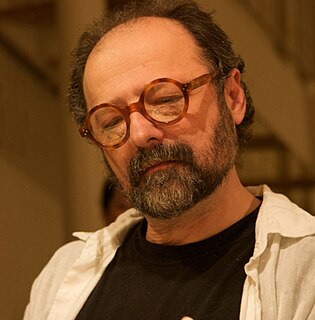
WMichael Gitlin is a contemporary sculptor.
 W
WIsrael Hershberg is a figurative painter who lives and works in Jerusalem. Hershberg is the director and founder of the Jerusalem Studio School.
 W
WMarcel Janco was a Romanian and Israeli visual artist, architect and art theorist. He was the co-inventor of Dadaism and a leading exponent of Constructivism in Eastern Europe. In the 1910s, he co-edited, with Ion Vinea and Tristan Tzara, the Romanian art magazine Simbolul. Janco was a practitioner of Art Nouveau, Futurism and Expressionism before contributing his painting and stage design to Tzara's literary Dadaism. He parted with Dada in 1919, when he and painter Hans Arp founded a Constructivist circle, Das Neue Leben.
 W
WMenashe Kadishman was an Israeli sculptor and painter.
 W
WAda Karmi-Melamede is a noted Israeli architect.
 W
WLiliane Klapisch is an Israeli painter.
 W
WMoshe Kupferman (1926-2003) was an Israeli artist.
 W
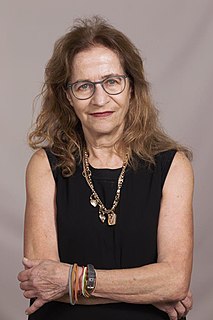
WMordechai (Motti) Mizrachi is an Israeli multimedia artist who creates politically engaged conceptual works that combine sculpture, video, photography, public art and performance. Dough, Via Dolorosa (1973) and Healing (1980) marked the emergence of avant-garde Israeli performance and video art. Since the 1980s, he has created numerous site specific public sculptures.
 W
WMichal Na'aman, is an Israeli painter. From the point of view of values, her work is characterized as conceptual art and deals with such subjects as the limitations of language and sight, the possibilities for expression, and gender issues. Using the techniques of collage, Na'aman has created works that examine the visual way of thinking as opposed to the verbal way of thinking. In 2014 she was awarded the Israel Prize for Plastic Arts for her work.
 W
WJoshua Neustein is a contemporary visual artist who lives and works in New York City. He is known for his Conceptual Art, environmental installations, Land Art, Postminimalist torn paper works, epistemic abstraction, deconstructed canvas works, and large-scale map paintings.
 W
WLea Nikel was an Israeli abstract artist.
 W
WYechiel Shemi (1922-2003) was an Israeli sculptor. His environmental sculptures are displayed in open spaces around the country.
 W
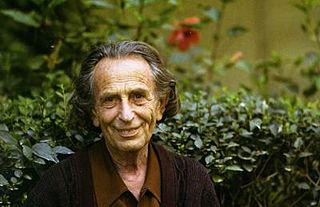
WAvigdor Stematsky (1908–89) was a Russian-born Israeli painter. He is considered one of the pioneers of Israeli abstract art.
 W
WYehezkel Streichman was an Israeli painter. He is considered a pioneer of Israeli modernist painting. Among the awards that he won were the Dizengoff Prize and the Israel Prize.
 W
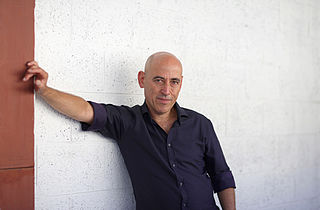
WDavid Tartakover is an Israeli graphic designer, political activist, artist and design educator.
 W
WNahum Tevet is an Israeli sculptor. Tevet's conceptual work uses minimalism and other references, creating sculptural/architectural installations based on geometrical modules.
 W
WAnna Ticho was a Jewish artist who became famous for her drawings of the Jerusalem hills.
 W
WIgael Tumarkin was an Israeli painter and sculptor.
 W
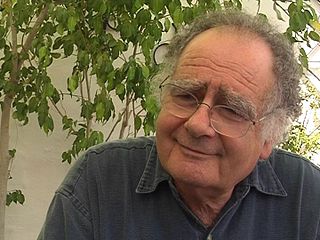
WMicha Ullman is an Israeli sculptor and professor of art.
 W
WAviva Uri was an Israeli painter.
 W
WJoseph (Yossef) Zaritsky was one of the early promoters of modern art in the Land of Israel both during the period of the Yishuv and after the establishment of the State. Regarded as one of the most influential Isreali painters, Zaritsky is known for cofounding the "Ofakim Hadashim" group. In his works, he created a uniquely Israeli style of abstract art. For this work he was awarded the Israel Prize for painting in 1959.