 W
WLéonard Tsuguharu Foujita was a Japanese–French painter and printmaker born in Tokyo, Japan, who applied Japanese ink techniques to Western style paintings. He has been called "the most important Japanese artist working in the West during the 20th century". His Book of Cats, published in New York by Covici Friede, 1930, with 20 etched plate drawings by Foujita, is one of the top 500 rare books ever sold, and is ranked by rare book dealers as "the most popular and desirable book on cats ever published".
 W
WFujiwara Nobuzane (1176–1265) was one of the leading Japanese portrait artists of his day.
 W
WFujiwara no Takanobu (1142–1205) was one of the leading Japanese portrait artists of his day.
 W
WKatsushika Hokusai, known simply as Hokusai, was a Japanese artist, ukiyo-e painter and printmaker of the Edo period. Hokusai is best known for the woodblock print series Thirty-Six Views of Mount Fuji which includes the internationally iconic print The Great Wave off Kanagawa.
 W
WIwasa Matabei was a Japanese artist of the early Tokugawa period, who specialized in genre scenes of historical events and illustrations of classical Chinese and Japanese literature, as well as portraits. He was the son of Araki Murashige, a prominent daimyō of the Sengoku period who had been made to commit suicide, leaving Matabei to be raised with his mother's family name, Iwasa.
 W
WKanō Motonobu was a Japanese painter and calligrapher. He was a member of the Kanō school of painting. Through his political connections, patronage, organization, and influence he was able to make the Kanō school into what it is today. The system was responsible for the training of a great majority of painters throughout the Edo period (1603–1868). After his death, he was referred to as Kohōgen (古法眼).
 W
WTakeshiro Kanokogi , born in Okayama Prefecture was a Japanese painter.
 W
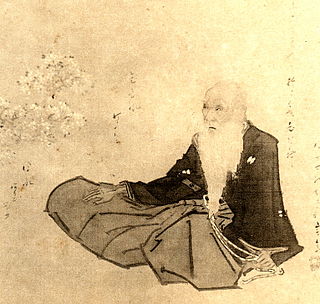
WKikuchi Yōsai , also known as Kikuchi Takeyasu and Kawahara Ryōhei, was a Japanese painter most famous for his monochrome portraits of historical figures.
 W
WRyūsei Kishida was a Japanese painter in Taishō and Shōwa period Japan. He is best known for his realistic yōga-style portraiture, but also for his nihonga paintings in the 1920s.
 W
WKohno Michisei was a Japanese painter, illustrator, and printmaker known for his association with the yōga movement of the early 20th century. His work is considered representative of the Taishō period in Japanese art.
 W
WNarashige Koide was a Japanese painter and illustrator, noted for his work in pioneering the Hanshinkan Modernism trend in yōga (Western-style) portraiture and nude painting in early 20th century Japanese painting.
 W
WUtagawa Kunisada, also known as Utagawa Toyokuni III, was the most popular, prolific and commercially successful designer of ukiyo-e woodblock prints in 19th-century Japan. In his own time, his reputation far exceeded that of his contemporaries, Hokusai, Hiroshige and Kuniyoshi.
 W
WTomori Nagamoto aka tomolennon is a self-taught visual artist, poet, and musician.
 W
WYūzō Saeki was a Japanese painter, noted for his work in developing modernism and Fauvist Expressionism within the yōga (Western-style) art movement in early twentieth-century Japanese painting.
 W
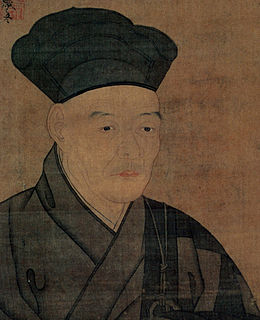
WSesshū Tōyō was the most prominent Japanese master of ink and wash painting from the middle Muromachi period. He was born into the samurai Oda family (小田家), before being brought up and educated to become a Rinzai Zen Buddhist priest. However, early in life he displayed a talent for visual arts, and eventually became one of the greatest Japanese artists of his time, widely revered throughout Japan.
 W
WTakahashi Yuichi was a Japanese painter, noted for his pioneering work in developing the yōga (Western-style) art movement in late 19th-century Japanese painting.There were many Japanese painters who tried Western painting and Western style painting in the modern age, but Yuichi is said to be the first "Western painter" in Japan who learned full-scale oil painting techniques and was active from the late Edo period to the middle of the Meiji era.
 W
WMasami Teraoka is an American contemporary artist. His work includes Ukiyo-e-influenced woodcut prints and paintings in watercolor and oil.
 W
WTsubaki Chinzan, originally Tasuku was a Japanese painter in the nanga style. His other art names include Hekiin Sambō, Kyūan (休庵), Shikyūan (四休庵) and Takukadō (琢華堂).
 W
WUtagawa Kuniyoshi was one of the last great masters of the Japanese ukiyo-e style of woodblock prints and painting. He was a member of the Utagawa school.
 W
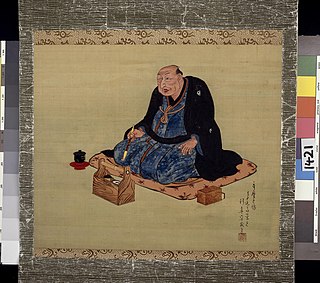
WKitagawa Utamaro was a Japanese artist. He is one of the most highly regarded designers of ukiyo-e woodblock prints and paintings, and is best known for his bijin ōkubi-e "large-headed pictures of beautiful women" of the 1790s. He also produced nature studies, particularly illustrated books of insects.
 W
WWatanabe Kazan was a Japanese painter, scholar and statesman member of the samurai class.
 W
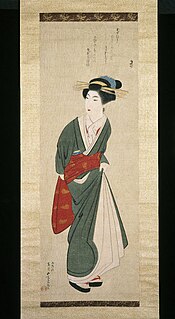
WYamaguchi Soken, also called Takejirō was a Japanese painter of the Shijō school. He was one of the "Ten Great Ones", taught by Maruyama Ōkyo.
 W
WTetsugorō Yorozu was a Japanese painter, noted for his work in introducing the Avant-garde trend, especially cubism into Japanese yōga (Western-style) painting in the early 20th century.