 W
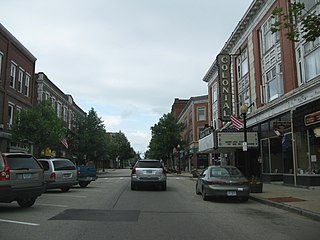
WThe Colonial Theatre Complex is a group of historic buildings in Laconia, New Hampshire. There are three sections to the complex: the Piscopo Block, Colonial Theatre, and Canal Street Annex. The Piscopo Block, which contains the main entrance to the theatre, is distinguished by a large marquee spelling out "COLONIAL" that is located on Main Street. The complex was built in 1914, and was added to the National Register of Historic Places in 2020.
 W
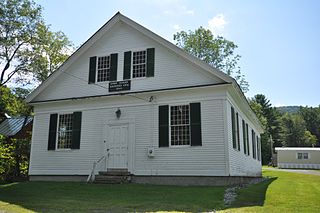
WThe Enfield Center Town House is an historic former town hall on New Hampshire Route 4A in Enfield Center, New Hampshire. Constructed in 1845–46, it was added to the National Register of Historic Places (NRHP) in 2017.
 W
WThe Faulkner & Colony Woolen Mill is an historic mill building located at 222 West Street in Keene, New Hampshire. It was added to the National Register of Historical Places (NRHP) in 2020.
 W
WThe Kensington Social Library is an historic building located at 126 Amesbury Road in Kensington, New Hampshire. The building, constructed in 1895, was listed on the National Register of Historic Places in 2020.
 W
WOwls Head is an historic log cabin located on the shore of Newfound Lake in Hebron, New Hampshire. Built in 1927, it was added to the National Register of Historic Places in 2015.
 W
WPickering House is an historic house in the town of Wolfeboro, New Hampshire. It is located on South Main Street in the town center. The property was listed on the National Register of Historic Places (NRHP) in 2019. Pickering House is located approximately 300 feet (91 m) east of Brewster Memorial Hall, which is also listed on the NRHP.
 W
WRye Town Hall is an historic town hall located at 10 Central Road in Rye, New Hampshire. Constructed in 1839 and purchased by the town in 1873, it was listed on the National Register of Historic Places in 2020, and the New Hampshire State Register of Historic Places in 2013.
 W
WThe Sainte Marie Roman Catholic Church Parish Historic District, located in the city of Manchester, New Hampshire, United States, includes seven red brick buildings dating from the late 19th century and 20th century. The district was placed on the National Register of Historic Places in September 2019.
 W
WThe Taylor Apartments is a historic apartment building located at 117 South Grand Avenue West in Springfield, Illinois. The six-flat building was built by Dr. Percy L. Taylor in 1916. Taylor, the former City Physician of Springfield, rented the apartments as a source of retirement income. Springfield experienced a population boom in the 1900s and 1910s, and most of its new residents were young professionals who only lived there for a short time. As a result, many new apartments were built during this period, particularly in Springfield's Aristocracy Hill neighborhood where the Taylor Apartments were located. The rise in apartments for professionals led to the increased social acceptability of Springfield's apartments, which had previously been seen as lower-status housing. The six-flat apartment was one of the more common building types during the boom, and the Taylor Apartments are a representative example of the style.
 W
WThe T. L. Thorpe Building was an historic commercial building located at 19 Traction Street in Manchester, New Hampshire. It was added to the National Register of Historic Places (NRHP) in 1982.
 W
WThe Howard K. Weber House is a historic house located at 925 South 7th Street in Springfield, Illinois. While the house was built in the 1840s, its current design comes from a series of additions and renovations which began in 1878. However artifacts discovered in the basement date around the 1820s. Howard K. Weber, a prominent local banker, started this renovation process shortly after buying the house. The house's new design was primarily Italianate, as the style was then nationally popular; its influence can be seen in the asymmetrical plan, the low hip roof with a bracketed cornice, and the arched windows. The house also exhibits a late Victorian influence in its more detailed elements, particularly the first-floor bay windows and the Gothic moldings on the second floor.