 W
WThe Acting Superintendent's Headquarters in Yosemite National Park was built by the U.S. Army at Camp A.E. Wood in the Wawona district of the park in 1904 to house the commander of the military administration that operated the park in the years prior to the establishment of the National Park Service. It was moved to the Yosemite Valley in 1906. The Acting Superintendent's Headquarters is the last remaining structure at Wawona associated with the park's military administration. The cabin followed the military to the Yosemite Valley, remaining there until 1958, when it was moved back to Wawona. It is part of the Pioneer Yosemite History Center.
 W
WThe Ahwahnee Hotel is a grand hotel in Yosemite National Park, California, on the floor of Yosemite Valley. It was built by the Yosemite Park and Curry Company and opened for business in 1927. The hotel is constructed from steel, stone, concrete, wood, and glass, and is a premier example of National Park Service rustic architecture. It was declared a National Historic Landmark in 1987.
 W
WCamp 4 is a campground in Yosemite National Park. It became notable after World War II as the hangout for rock climbers with many spending months there—not necessarily legally. It is located near Yosemite Falls, on the north side of the valley. There is a single parking lot at the campground, and no driveways connecting to individual campsites, so visitors must carry their gear in. Nearby boulders have long been used for bouldering. Among the boulders located here, the Columbia Boulder is probably the most famous. On it is the boulder problem called the Midnight Lightning first done by Ron Kauk in 1978. It is easily recognizable by a painting of a white thunderbolt next to it.
 W
WThe Crane Flat Fire Lookout in Yosemite National Park was built in 1931. An example of the National Park Service Rustic style, the lookout is a two-story structure with a lower storage or garage level and an upper observation level, with an overhanging roof. Design work was carried out by the National Park Service Landscape Division.
 W
WCurry Village is a resort in Mariposa County, California in Yosemite National Park within the Yosemite Valley.
 W
WThe Glacier Point Trailside Museum was one of the first projects in Yosemite National Park by Herbert Maier in what would become the National Park Service Rustic style. Located at Glacier Point, it was funded by Laura Spelman Rockefeller's estate as a project for the Yosemite Museum. It was the first "trailside museum" in the National Park system and was a prototype for enhanced visitor interpretation services in the parks.
 W
WThe Great Sierra Mine Historic Site preserves the site of the largest mining operation in what would become Yosemite National Park. The mine was located on Tioga Hill on the crest and eastern slope of the Sierra Nevada, one of several claims intended to work the Sheepherder silver lode. The Sheepherder lode was discovered in 1860, and rediscovered by shepherd Thomas Brusky, Jr., who staked a number of claims in the area. In 1881 all of the claims were bought out by the Great Sierra Consolidated Silver Mining Company and established the company town of Dana. Due to the 11,000 foot altitude the town was soon relocated to the bottom of the hill at Bennettville.
WThe Great Sierra Wagon Road was a route through the Sierra Nevada in California, built to bring supplies to the Great Sierra Mine on Tioga Hill in the high country of what was to become Yosemite National Park. The road was built in 1882 by the Great Sierra Silver Mining Company, extending over 56.25 miles (90.53 km), in 130 days. The mine promptly shut down, leaving the road without a purpose. In 1915 the road was purchased by Stephen T. Mather, the independently wealthy first director of the National Park Service, who donated it to the Park Service. The Park Service opened the road to the public, calling it the Tioga Road. Designated California State Route 120, the road traverses the park from its west to east entrances.
 W
WThe Hodgdon Homestead Cabin was built by Jeremiah Hodgdon in 1879 in the Aspen Valley area of what became Yosemite National Park. The two-story log cabin, measuring 22 feet (6.7 m) by 30 feet (9.1 m), was located in an inholding in the park, owned by Hodgdon's descendants. In the 1950s the family proposed to demolish the structure. The National Park Service acquired it and moved it to its Pioneer Yosemite History Center at Wawona, where the restored cabin is part of an exhibit on early settlement and development of the Yosemite area. In addition to housing Hogdon, the cabin housed workers on the Great Sierra Wagon Road in the 1880s, as a patrol cabin for U.S. Army troops who managed the new national park in the 1890s, and as a historic landmark at the old Aspen Valley Resort.
 W
WThe Chris Jorgensen Studio is a one-room log building, built in 1904 as an artist's studio for Chris Jorgensen in the Yosemite Valley. Jorgensen, an instructor and assistant director of the California School of Fine Arts, arrived in Yosemite in the 1890s. Jorgensen studied and depicted local Native Americans from 1899, collecting native basketwork. The National Park Service acquired the Jorgensen Studio in 1919, calling it the Yosemite Museum. Jorgensen donated his basket collection to the museum in 1923. Jorgensen's widow, Angela Ghiardelli, donated many of Jorgensen's works to the museum following his death in 1935.
 W
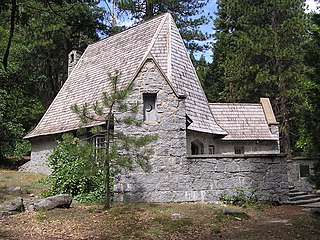
WThe LeConte Memorial Lodge, now known as the Yosemite Conservation Heritage Center, is a structure in Yosemite National Park in California, United States. LeConte is spelled variously as Le Conte or as Leconte. Built in 1903 by the Sierra Club, it is nearly unique within the National Park Service system as a high-quality example of Tudor Revival architecture, and is an important early expression of the Club's mission. The lodge was declared a National Historic Landmark in 1987.
 W
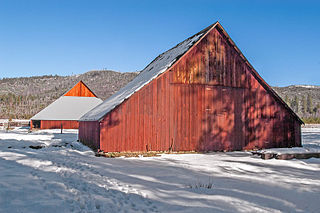
WThe McCauley and Meyer Barns in Yosemite National Park are the last barns in the park that retain their original characteristics as structures built by homesteaders. The McCauley barn and the two Meyer barns represent different construction techniques and styles of design.
 W
WThe McGurk Cabin in Yosemite National Park was the seasonal home of Yosemite cattleman Jack McGurk from 1895 to 1897. Located on the edge of McGurk's Meadow, just to the north of the Glacier Point Road, the cabin was used by a series of owners beginning with Hugh Davanay, from whom McGurk bought the property in 1895. McGurk was evicted by the Army in 1897 after a dispute over title to the land. The log cabin is a one-room structure, about 14 feet (4.3 m) square, with saddle-notched peeled lodgepole pine logs. The only opening is a low door on the south side. The cabin was stabilized in 1958 by Sierra Club volunteers. It is one of the few structures left in the park that remain from the pre-park era.
 W
WThe Merced Grove Ranger Station in Yosemite National Park was designed by the National Park Service and completed in 1935. An example of the National Park Service Rustic style, it features log construction. The station is near the Merced Grove of giant sequoias, in the Crane Flat region of the park.
 W
WThe Parsons Memorial Lodge is a small building built in 1915 by the Sierra Club at the northern end of Tuolumne Meadows of Yosemite National Park. It was one of the earliest structures built of stone in a national park.
 W
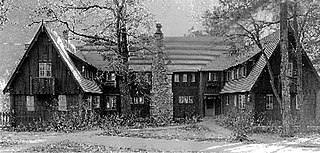
WThe Rangers' Club is a building in Yosemite Valley in Yosemite National Park that was donated by the independently wealthy first director of the National Park Service, Stephen Tyng Mather. He intended it to be used by the newly hired park rangers who were taking over from the departing army troops. He specifically intended it to blend into the natural environment. Its use of rustic stylings was part of a trend to the use of rustic design and natural materials in Park Service buildings until the 1940s.
 W
WThe Soda Springs Cabin is a historic structure in Yosemite National Park in the US, built over Soda Springs. It was built around the year 1889 by John Baptist Lembert, the first European settler on the Tuolumne Meadows area of Yosemite. Lembert had filed a claim to 160 acres (65 ha) in Tuolumne Meadows in 1885 after spending three summers in the area with a flock of angora goats. He built a log cabin directly over the largest soda spring in the area. Although the property was within the park boundaries, Lembert received a patent to the property in 1895. Lembert's cabin was built along the Great Sierra Wagon Road over the Sierra Nevada. He also became a guide for tourists in the high country, gaining a reputation as a naturalist and entomologist. He spent the winter months near Cascade Creek in the Yosemite Valley.
 W
WThe Tioga Pass Entrance Station is the primary entrance for travelers entering Yosemite National Park from the east on the Tioga Pass Road. Open only during the summer months, the entrance station consists of two historical buildings, a ranger station and a comfort station, built in 1931 and 1934 respectively. Both are rustic stone structures with peeled log roof structures, and are examples of the National Park Service rustic style employed at the time by the National Park Service. Two log gate structures that had been removed since the site's original construction were rebuilt in 1999; the stone piers that supported them remain. The use of stone at Tioga Pass set a precedent for the extensive employment of stone construction in other park buildings in the Yosemite high country. Civilian Conservation Corps workers assisted in the entrance station's construction.
 W
WTuolumne Meadows is a gentle, dome-studded, sub-alpine meadow area along the Tuolumne River in the eastern section of Yosemite National Park in the United States. Its approximate location is 37°52.5′N 119°21′W. Its approximate elevation is 8,619 feet (2,627 m). The term Tuolumne Meadows is also often used to describe a large portion of the Yosemite high country around the meadows, especially in context of rock climbing.
 W
WThe Tuolumne Meadows Ranger Station and Comfort Stations are examples of National Park Service Rustic design in Yosemite National Park. They are within the Tuolumne Meadows Historic District at Tuolumne Meadows. The ranger station was built in 1924 using peeled log construction. The ranger station doubled as the park entrance station for the Tioga Road. Its function was partly superseded by a newer structure in 1936, using larger quantities of stonework.
 W
WThe Wawona Covered Bridge is a covered bridge spanning the South Fork of the Merced River near Wawona, California in Yosemite National Park. The bridge was built by Galen Clark, the steward of what was then called the Yosemite Grant, in 1868, without its cladding. The bridge was a major component of Clark's proposed new road from Wawona to the Yosemite Valley. Clark was unable to complete the road, which he sold to the Washburn Group of investors along with the Wawona Hotel. The Washburn Group completed the road to the Yosemite Valley in 1879. It is one of twelve remaining covered bridges in California.
 W
WThe Wawona Hotel is a historic hotel located within southern Yosemite National Park, in California. It was declared a National Historic Landmark in 1987, and is on the National Register of Historic Places.
 W
WThe Yosemite Transportation Company Office, also known as the Wells Fargo Office, was built in the Yosemite Valley in 1910 to house facilities of motor stage and horse stage services between the nearest rail terminal at El Portal and Yosemite National Park. The rustic log structure also provided telegraph and express services.
 W
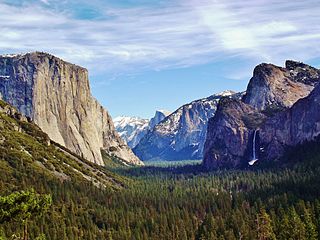
WYosemite Valley is a glacial valley in Yosemite National Park in the western Sierra Nevada mountains of Central California. The valley is about 7.5 miles (12 km) long and approximately 3000–3500 feet deep, surrounded by high granite summits such as Half Dome and El Capitan, and densely forested with pines. The valley is drained by the Merced River, and a multitude of streams and waterfalls flow into it, including Tenaya, Illilouette, Yosemite and Bridalveil Creeks. Yosemite Falls is the highest waterfall in North America and is a big attraction especially in the spring, when the water flow is at its peak. The valley is renowned for its natural environment and is regarded as the centerpiece of Yosemite National Park, attracting visitors from around the world.
 W
WThe Yosemite Valley Bridges are eight bridges in the Yosemite Valley of Yosemite National Park, most of them spanning the Merced River. Five of them were built in 1928, with the remainder built between 1921 and 1933. The bridges feature a concrete structure faced with local stone, in an elliptical or three-centered arch configuration. They are notable for their uniform character and for their conformance to tenets of the National Park Service rustic style. Design work for the seven newer bridges was by George D. Whittle of the San Francisco District Office of the U.S. Bureau of Public Roads for the National Park Service. Concrete bridges were chosen at the urging of Thomas Chalmers Vint of the Park Service, in lieu of alternative designs for steel truss bridges, or suspension bridges suggested by the park superintendent.
 W
WThe Yosemite Valley Chapel was built in the Yosemite Valley of California in 1879.
 W
WThe Yosemite Village Historic District encompasses the primary built-up section of the Yosemite Valley as it was developed by the National Park Service for Yosemite National Park. The district includes visitor services areas, park personnel residences and administrative facilities. It is located to the north of the Merced River. The district includes the National Historic Landmark Rangers' Club.