 W
WThis is a list of gunboat and gunvessel classes of the Royal Navy.
 W
WHMS Tickler was a Royal Navy Gadfly-class flat-iron gunboat launched in 1879. She was transferred to Simon's Town in South Africa in 1885 and converted to a steam lighter in 1902. In 1919 she became HMS Afrikander and was transferred to the South African Naval Service in 1923, becoming HMSAS Afrikander. She was returned to the Royal Navy in December 1932 and re-named HMS Afrikander II in 1933. She was finally broken up at Simon's Town in 1937.
 W
WThe Albacore-class gunboat was a class of three gunboats built for the Royal Navy in 1883. The name had already been used for a class of 98 gunboats built during the Great Armament of the Crimean War.
 W
WAventurier, was a 16-gun brig of the French Navy. She was launched in 1793 and the Royal Navy captured her in 1798. The British named her HMS Aventurier and disposed of her in 1802.
 W
WThe Britomart-class gunboat was a class of sixteen gunboats built for the Royal Navy in 1859–1867.
 W
WThe Cheerful-class gunboat was a class of twenty gunboats built for the Royal Navy in 1855 for use in the Crimean War.
WThe Clown-class gunboat was a class of twelve gunboats ordered by the Royal Navy in January 1856 for use in the Crimean War, although by the time they were completed, later that year, the Crimean War was over and some of these gunboats were sent to the Far East and took part in the Second Opium War.
 W
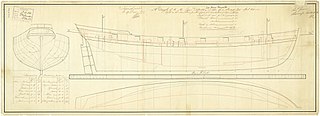
WHMS Defender was the French privateer lugger Bon Marcel, that Royalist captured in 1809. Defender served without distinction in Home Waters for slightly more than three years before being sold in 1814.
 W
WThe Dragonfly class was a class of river gunboats. Six were planned and five were built: of those five, four were lost in the Second World War. One of the four was HMS Scorpion, a slightly upgunned and better powered version.
 W
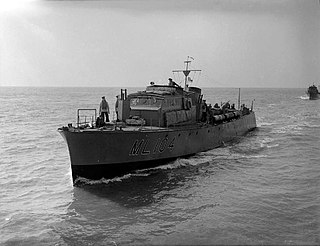
WThe Fairmile A motor launch was a type of motor launch designed by Fairmile Marine for the Royal Navy.
 W
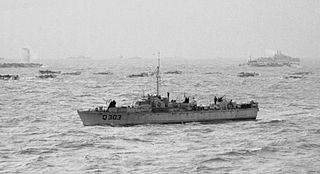
WThe Fairmile Type-B motor launch was a type of motor launch built by British boatbuilder Fairmile Marine during the Second World War for the Royal Navy for coastal operations.
 W
WThe Canadian Fairmile B was a type of motor launch originally designed for the Royal Navy (RN) by W.J. Holt of the British Admiralty and built by British boatbuilder Fairmile Marine. Affectionately known by their crews as The Little Ships, Little Fighting Ships, Q-Boats, MLs or Holy Rollers, during the Second World War eighty-eight Fairmile B boats, with slight modifications for Canadian climatic and operational conditions, were built in Canada for service with the coastal forces of the Royal Canadian Navy in home waters.
 W
WThe Fairmile C motor gun boat was a type of motor gunboat designed by Norman Hart of Fairmile Marine for the Royal Navy. An intermediate design, twenty-four boats were built in 1941 receiving the designations MGB 312–335.
 W
WThe Fly-class river gunboats, collectively often referred to as the "Tigris gunboat flotilla", were a class of small but well-armed Royal Navy vessels designed specifically to patrol the Tigris river during the World War I Mesopotamian Campaign.
 W
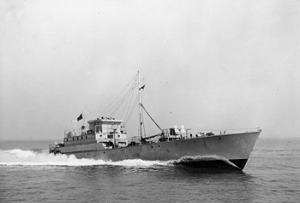
WGay Viking was a blockade runner of the British Merchant Navy. Originally under construction as a Motor Gun Boat, Gay Viking was one of eight vessels that were ordered by the Turkish Navy, but were requisitioned by the Royal Navy to serve with Coastal Forces during the Second World War. Originally intended to be HMMGB 506, the vessel was instead completed as a blockade runner for the Merchant Navy and named Gay Viking. She operated out of Hull on two separate operations to the Scandinavian countries. She was one of the more successful of her group, but was lost in a collision while returning from one of these operations. Reports indicate that she may have been salvaged after this and gone on to sail for a considerable number of years as a civilian vessel.
 W
WHMS Grasshopper was a Dragonfly-class river gunboat built for the Royal Navy in the late 1930s. After completion was sent to the China station where she was deployed on the Yangtse River to relieve the Insect-class gunboat, HMS Gnat. She remained there until the declaration of war by the Empire of Japan in December 1941. She was subsequently transferred to Singapore Naval Base and participated in the Malayan Campaign in early 1942. Near the end of the Battle of Singapore, she evacuated the base on 11 February together with her sister ship HMS Dragonfly. Three days later she was attacked and sunk by Japanese aircraft off the island of Sebayer. Most of the ship's survivors were later captured on Sumatra by Japanese troops.
 W
WGrinder was a gunboat serving as a tender, rather than a commissioned warship, to HMS Anholt, the British garrison on the island of Anholt during the Gunboat War. Grinder's origins are obscure, but the Danes captured her in 1810 and the British recaptured her in 1811. She was sold in 1832.
 W
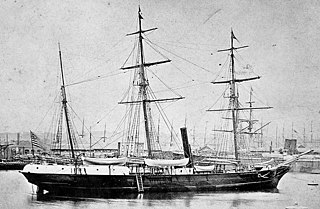
WUSS Jeannette was a naval exploration vessel which, commanded by George W. De Long, undertook the Jeannette expedition of 1879–1881 to the Arctic. After being trapped in the ice and drifting for almost two years, the ship and her crew of 33 were released from the ice, then trapped again, crushed and sunk some 300 nautical miles north of the Siberian coast. The entire crew survived the sinking, but 11 died while sailing towards land in a small cutter. The others reached Siberia, but nine subsequently perished in the Lena Delta, including De Long.
 W
WThe Kil class was a class of sloops, also referred to as gunboats, built for the Royal Navy during the First World War. They were designed for anti-submarine warfare, but were completed too late in the war to be used extensively in that role. They were designed to be double-ended to confuse submarine observers, and were painted in dazzle camouflage. Following the war, the majority of the class were sold off and converted to coastal cargo vessels.
 W
WHMS Kilbride was a sloop of the Kil class which were also referred to as gunboats, built for the Royal Navy during the First World War. It was designed for anti-submarine warfare, but was completed too late in the war to be used extensively in that role. The class were designed to be double-ended to confuse submarine observers, and were painted in dazzle camouflage.
 W
WSteam gun boats (SGBs) were small Royal Navy vessels used during the Second World War. The class consisted of nine torpedo boats, powered by steam, and built from 1940 to 1942 for the Coastal Forces of the Royal Navy.
 W
WHMS Vesuve was the French brick-cannonière Vésuve, name vessel of her class of seven bricks-cannonière. She was launched at Saint-Malo in 1793. The British Royal Navy captured her in 1795 and took her into service as HMS Vesuve. The Navy sold her in 1802.
 W
WHMS Vixen was an armoured composite gunboat, the only ship of her class, and the third ship of the Royal Navy to bear the name. She was the first Royal Navy vessel to have twin propellers.
 W
WHMS Waterwitch was one of only three armoured gunboats built for the Royal Navy. Uniquely she was powered by Ruthven's "hydraulic propeller", making her the first ship to employ waterjets. She was launched in 1866 and conducted comparative trials with her two sister ships. She was not employed operationally and was sold in 1890.