 W
WAbbán moccu Corbmaic, also Eibbán or Moabba, is a saint in Irish tradition. He was associated, first and foremost, with Mag Arnaide and with Cell Abbáin. His cult was, however, also connected to other churches elsewhere in Ireland, notably that of his alleged sister Gobnait.
 W
WÁed mac Bricc was an Irish bishop and saint.
 W
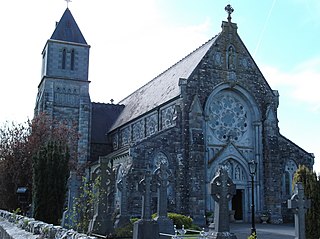
WSaint Ailbe, usually known in English as St Elvis (British/Welsh), Eilfyw or Eilfw, was regarded as the chief 'pre-Patrician' saint of Ireland. He was a bishop and later saint.
 W
WAthracht is the patron saint of the parish of Locha Techet and Tourlestrane, Co. Sligo, Ireland. She was a sister of Bishop Conal of Drumconnell. Her feast day is 11 August.
 W
WSaint Blane was a Bishop and Confessor in Scotland, born on the Isle of Bute, date unknown; died 590. His feast is kept on 10 August.
 W
WBrendan of Clonfert, also referred to as "Brendán moccu Altae", called "the Navigator", "the Voyager", "the Anchorite", and "the Bold", is one of the early Irish monastic saints and one of the Twelve Apostles of Ireland. He is primarily renowned for his legendary quest to the "Isle of the Blessed", also denominated "Saint Brendan's Island". The Navigatio Sancti Brendani Abbatis can be described as an immram, i. e., Irish navigational narrative.
 W
WSaint Brendan of Birr was one of the early Irish monastic saints. He was a monk and later an abbot, of the 6th century. He is known as "St Brendan the Elder" to distinguish him from his contemporary and friend St Brendan the Navigator of Clonfert. He was one of the Twelve Apostles of Ireland, a friend and disciple of Saint Columba.
 W
WSaint Budoc of Dol was a Bishop of Dol, venerated after his death as a saint in both Brittany and Devon. Saint Budoc is the patron of Plourin Ploudalmezeau in Finistère where his relics are preserved. His feast day was celebrated on 8 December, the date still used in Devon, but in Brittany this was moved to 9 December.
 W
WSaint Buriana was a 6th-century Irish saint, a hermit in St Buryan, near Penzance, Cornwall. Baring-Gould identifies her with the Irish Saint Bruinsech.
 W
WSaint Cainnech of Aghaboe (515/16–600), also known as Saint Canice in Ireland, Saint Kenneth in Scotland, Saint Kenny and in Latin Saint Canicus, was an Irish abbot, monastic founder, priest and missionary during the early medieval period. Cainnech is one of the Twelve Apostles of Ireland and preached Christianity across Ireland and to the Picts in Scotland. He wrote a commentary on the Gospels, which for centuries was known as the Glas-Choinnigh or Kenneth's Lock or the Chain of Cainnech.
 W
WSaint Ciarán of Clonmacnoise, supposedly born Ciarán mac an tSaeir, was one of the Twelve Apostles of Ireland and the first abbot of Clonmacnoise. He is sometimes called Ciarán the Younger to distinguish him from the 5th-century Saint Ciarán the Elder who was bishop of Osraige. His name produced many variant spellings, including Ceran, Kieran, Queran and Queranus.
 W
WCiarán of Saigir, also known as Ciarán mac Luaigne or Saint Kieran, was one of the Twelve Apostles of Ireland and is considered the first saint to have been born in Ireland, although the legend that he preceded Saint Patrick is questionable. Ciarán was bishop of Saighir (Seir-Kieran) and remains the patron saint of its successor, the diocese of Ossory.
 W
WSaint Colmán of Cloyne, also Colmán mac Léníne, was a monk, founder and patron of Cluain Uama, now Cloyne, County Cork, Ireland, and one of the earliest known Irish poets to write in the vernacular.
 W
WColumba was an Irish abbot and missionary evangelist credited with spreading Christianity in what is today Scotland at the start of the Hiberno-Scottish mission. He founded the important abbey on Iona, which became a dominant religious and political institution in the region for centuries. He is the patron saint of Derry. He was highly regarded by both the Gaels of Dál Riata and the Picts, and is remembered today as a Catholic saint and one of the Twelve Apostles of Ireland. In Ireland, he is commonly known as Colmcille.
 W
WColumbanus was an Irish missionary notable for founding a number of monasteries after 590 in the Frankish and Lombard kingdoms, most notably Luxeuil Abbey in present-day France and Bobbio Abbey in present-day Italy.
 W
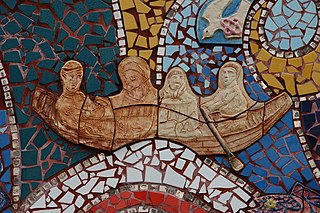
WSaint Comgall, an early Irish saint, was the founder and abbot of the great Irish monastery at Bangor in Ireland.
 W
WSaint Conleth was an Irish hermit and metalworker, also said to have been a copyist and skilled illuminator of manuscripts. He is believed to have come from the Wicklow area.
 W
WSaint Cuimín is an Irish saint associated with the parish of Kilcummin in the barony of Tirawley, County Mayo. Kilcummin, a headland to the west of Killala Bay, preserves the remains of a religious site, with a church of early date and a graveyard.
 W
WDarbiled was an Irish anchoress and founder of Inis Cethig, fl. 575–600.
 W
WSaint Deicolus is venerated as a saint by both the Catholic Church and the Orthodox Church as an East–West Schism, pre-Schism, Western saint. He was an elder brother of Saint Gall.
 W
WDiarmait mac Cerbaill was King of Tara or High King of Ireland. According to traditions, he was the last High King to follow the pagan rituals of inauguration, the ban-feis or marriage to goddess of the land.
 W
WSaint Faber is the patron saint of the Sacred Heart Church in Boho, County Fermanagh and of Monea.
 W
WSaint Finbar, Finnbar, or Finnbarr, in Irish Fionnbharra, very often abbreviated to Barra, was Bishop of Cork and abbot of a monastery in what is now Cork city, Ireland. He is patron saint of the city and of the Diocese of Cork. His feast day is September 25.
 W
WFinnian of Movilla was an Irish Christian missionary. His feast day is 10 September.
 W
WSaint Fridianus, was an Irish prince and hermit, fl. 6th century. Tradition names him as a son of King Ultach of Ulster. He later migrated to Italy, where he was appointed as Bishop of Lucca. The Basilica of San Frediano in the city is dedicated to him, as are churches in Florence.
 W
WSaint Gall, or Gallus according to hagiographic tradition was a disciple and one of the traditional twelve companions of Saint Columbanus on his mission from Ireland to the continent. Saint Deicolus was the elder brother of Gall.
 W
WSaint Gobnait, also known as Gobnat or Mo Gobnat or Abigail or Deborah, is the name of a medieval, female Irish saint whose church was Móin Mór, later Bairnech, in the village of Ballyvourney, County Cork in Ireland. She was associated with the Múscraige and her church and convent lay on the borders between the Múscraige Mittine and Eóganacht Locha Léin. Her feast day is 11 February.
 W
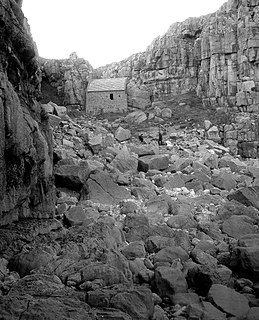
WSaint Govan was a hermit who lived in a fissure on the side of coastal cliff near Bosherston, in the Pembrokeshire Coast National Park, Wales. St. Govan's Chapel was built in the fissure in the 14th century on what is now known as St. Govan's Head.
 W
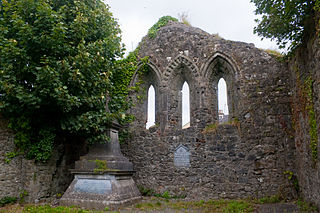
WÍte ingen Chinn Fhalad, also known as Ita, Ida or Ides, was an early Irish nun and patron saint of Killeedy. She was known as the "foster mother of the saints of Erin". The name "Ita" was conferred on her because of her saintly qualities. Her feast day is 15 January.
 W
WSaint Jarlath, also known as Iarlaithe mac Loga, was an Irish priest and scholar from Connacht, remembered as the founder of the monastic School of Tuam and of the Archdiocese of Tuam, of which he is the patron saint. No medieval Life for Jarlath is extant, but sources for his life and cult include genealogies, martyrologies, the Irish Lives of St Brendan of Clonfert, and a biography compiled by John Colgan in the 17th century.
 W
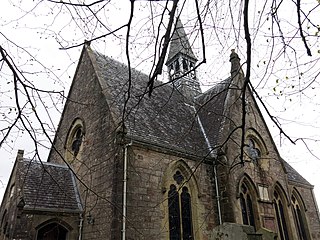
WSaint Kessog was an Irish missionary of the mid-sixth century active in the Lennox area and southern Perthshire. Son of the king of Cashel in Ireland, Kessog is said to have worked miracles, even as a child. He left Ireland and became a missionary bishop in Scotland. Using Monks' Island in Loch Lomond as his headquarters, he evangelized the surrounding area until he was martyred, supposedly at Bandry, where a heap of stones was known as St Kessog's Cairn. Kessog was killed in 520 AD.
 W
WSaint Livinus, also Livinus of Ghent, was an apostle in Flanders and Brabant, venerated as a saint and martyr in Catholic tradition and more especially at the Saint Bavo Chapel, Ghent. His feast day is 12 November.
 W
WSaint Mac Cairthinn, also Macartan, McCartan, is recognized as the first presiding Bishop of Clogher from 454 to his death. One of the earliest Christian saints in Ireland, he is known as Saint Patrick's "Threin Fhir", or "Strong Man" for his dedication and faithfulness to the fledgling Church. His feast day is 24 March.
 W
WMachar was a 6th-century Irish Saint active in Scotland.
 W
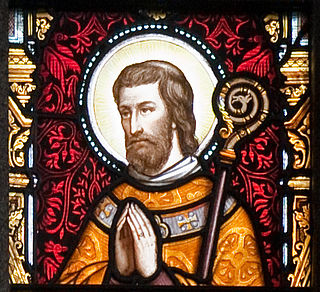
WSaint Máedóc, also known as Mogue and Aidan, was an Irish saint, founder and first bishop of Ferns in County Wexford and a patron of other churches, such as Rossinver in County Leitrim and Drumlane in County Cavan.
 W
WSaint Mo Chutu mac Fínaill, also known as Mochuda, Carthach or Carthach the Younger, was abbot of Rahan, County Offaly and subsequently, founder and first abbot of Lismore, County Waterford. The saint's Life has come down in several Irish and Latin recensions, which appear to derive from a Latin original written in the 11th or 12th century.
 W
WMo Sinu moccu Min, also known as Sinilis, Sinlán Moccu Mín was an Irish scholar.
 W
WMobhí Clárainech was an Irish early monastic saint, counted as one of the Twelve Apostles of Ireland. He was the abbot of a monastery in Glasnevin, where he was a teacher of Columba, Canice, Comgall, and Ciarán.
 W
WSt Modan was the son of an Irish chieftain. He became a monk and built a chapel at Dryburgh, Scotland, in 522 which he used as a base for several years. This later became the site of a monastery: Dryburgh Abbey.
 W
WSt. Modomnóc of Ossory (died c. 550) was an Irish saint and missionary in Osraige who was a disciple of St. David of Wales and a member of the O'Neill royal family. His feast day is February 13.
 W
WSaint Moluag was a Scottish missionary, and a contemporary of Saint Columba, who evangelized the Picts of Scotland in the sixth century. Saint Moluag was the patron saint of Argyll as evidenced by a charter in 1544, from the Earl of Argyll, which states "in honour of God Omnipotent, the blessed Virgin, and Saint Moloc, our patron". The House of Lorne became the kings of Dalriada and eventually united with the Picts to become the kings of Scots.
 W
WSaint Moninne of Killeavy was one of Ireland's early female saints. After instruction in the religious life, she founded a community, initially consisting of eight virgins and a widow with a baby, at Slieve Gullion, in what became County Armagh. They lived an eremitical life, based on that of Elijah and Saint John the Baptist. Moninne died in 517. Her feast day is 6 July.
 W
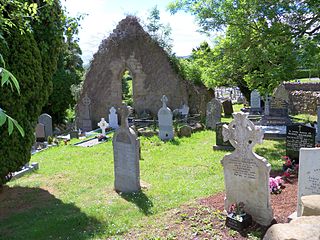
WSaint Muiredach mac Echdach, also known as Murtagh, was the founding Bishop of Killala, Ireland in the 6th century.
 W
WNatalis was a 6th-century Irish monk and saint.
 W
WNinnidh was a 6th-century Irish Christian saint. St. Ninnidh is regarded as one of the Twelve Apostles of Ireland. He is associated with shores of Lough Erne and particularly the island of Inishmacsaint and the parish of Knockninny, County Fermanagh, Northern Ireland. His feast day is 18 January.
 W
WOran or Odran, by tradition a descendant of Conall Gulban, was a companion of Saint Columba in Iona, and the first Christian to be buried on that island. St. Odhrán's feast day is on 27 October.
 W
WSaint Piran or Pyran, died c. 480, was a 5th-century Cornish abbot and saint, of Irish origin. He is the patron saint of tin-miners, and is also generally regarded as the patron saint of Cornwall, although Saint Michael and Saint Petroc also have some claim to this title.
 W
WSaint Ronan was an Irish pilgrim saint and hermit in western Brittany. He was a son of Saint Berach and the eponymous founder of Locronan and co-patron of Quimper (France), together with its founder, Saint Corentin.
 W
WSt. Scuithin also known as Scolan, Scothin or Scuitin was a medieval Irish saint with strong Welsh connections. Sometime in the 6th century Scuthin left Ireland to pursue a life of cenobitic monasticism at Tyddewi in Wales founded by St. David, whom at a later date he is reported to have saved from poisoning.
WSaint Sillan was early Irish saint and abbot of Bangor Abbey, Bangor, County Down. He was recorded as being a disciple and second or third successor of Saint Comgall, who was the founder and first abbot of the Benedictine monastery at Bangor. The village of Kilsheelan, County Tipperary is named after him. His Irish name is Sioláin which can translate to either "seed-basket" or "cullender/sieve".
 W
WTigernach mac Coirpri was an early Irish saint, patron saint of Clones in the province of Ulster.
 W
WSaint Ursus of Aosta was an Italian evangelist, today venerated as a saint.
 W
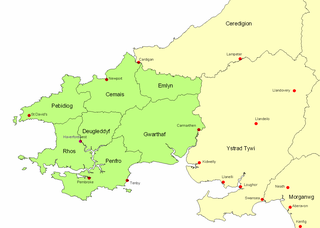
WVortiporius or Vortipor was a king of Dyfed in the early to mid-6th century. He ruled over an area approximately corresponding to modern Pembrokeshire, Wales. Records from this era are scant, and virtually nothing is known of him or his kingdom. The only contemporary information about Vortiporius comes from the Welsh ecclesiastic Gildas, in a highly allegorical condemnation from his De Excidio et Conquestu Britanniae. At the time the work was written, Gildas says that Vortiporius was king of Dyfed, that he was grey with age, that his wife had died, and that he had at least one daughter.