 W
WNiels Henrik Abel was a Norwegian mathematician who made pioneering contributions in a variety of fields. His most famous single result is the first complete proof demonstrating the impossibility of solving the general quintic equation in radicals. This question was one of the outstanding open problems of his day, and had been unresolved for over 250 years. He was also an innovator in the field of elliptic functions, discoverer of Abelian functions. He made his discoveries while living in poverty and died at the age of 26 from tuberculosis.
 W
WMarichen Cornelia Martine Altenburg was the mother of playwright Henrik Ibsen and belonged to the patriciate of Skien. She is considered the model for the character Åse in Peer Gynt and Inga of Varteig in The Pretenders, and indeed, she would "echo through her son's work in unremitting portrayals of suffering women." Henrik Ibsen himself confirmed that Åse in Peer Gynt was based on his mother.
 W
WNils F. Ambursen was a Norwegian-American civil engineer and inventor. He was the founder of Ambursen Hydraulic Construction Company and was known for his influential dam designs in the early 20th century.
 W
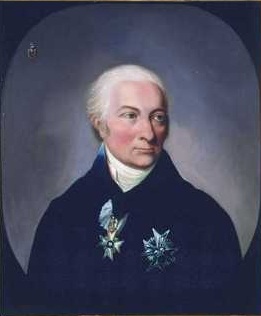
WCarsten Tank Anker was a Norwegian businessman, civil servant, politician and one of the Fathers of the Constitution of Norway. He was the owner of the manor house in Akershus at which the original National Assembly (Riksforsamlingen) of Norway was held. The manor house has since then been given the name Eidsvollsbygningen.
 W
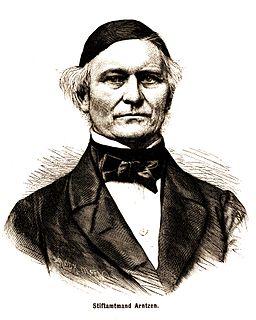
WKarelius August Arntzen was a Norwegian jurist, civil servant and politician.
 W
WHother Erich Werner Bøttger was a Norwegian architect.
 W
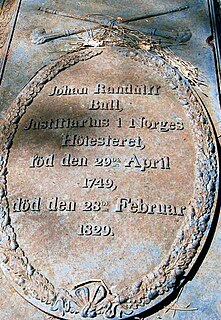
WJohan Randulf Bull was a Norwegian judge.
 W
WCarl Paul Caspari was a Norwegian neo-Lutheran theologian and academic. He was a Professor of Old Testament Theology at the University of Oslo. He wrote several books and is best known for his interpretations and translation of the Old Testament.
 W
WPrincess Louise Charlotte of Denmark was a Danish princess, and a princess of Hesse-Kassel by marriage to Prince William of Hesse-Kassel. She played an important role in the succession crisis in Denmark in the first half of the 19th century.
 W
WHalvor Olaus Christensen was a Norwegian politician.
 W
WChristian Colbjørnsen served as the Chief Justice of Denmark-Norway from 1802 until 1814.
 W
WPeter Collett was a Norwegian judge, businessman and property owner.
 W
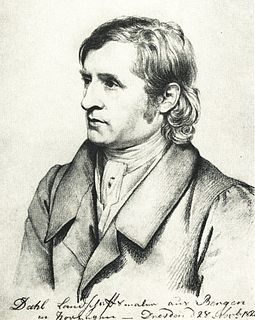
WJohan Christian Claussen Dahl, often known as J. C. Dahl or I. C. Dahl, was a Norwegian artist who is considered the first great romantic painter in Norway, the founder of the "golden age" of Norwegian painting, and, by some, one of the greatest European artists of all time. He is often described as "the father of Norwegian landscape painting" and is regarded as the first Norwegian painter to reach a level of artistic accomplishment comparable to that attained by the greatest European artists of his day. He was also the first to acquire genuine fame and cultural renown abroad. As one critic has put it, "J.C. Dahl occupies a central position in Norwegian artistic life of the first half of the 19th century.
 W
WChristian Ludvig Diriks was Norwegian government minister and general auditor.
 W
WChristian Magnus Falsen was a Norwegian constitutional father, statesman, jurist, and historian. He was an important member of the Norwegian Constituent Assembly and was one of the writers of the Constitution of Norway.
 W
WJohannes Flintoe was a Danish-born painter of Norwegian ancestry. He is known for his landscapes, costume studies and historical scenes. His works play a significant role in the transition to romantic nationalism.
 W
WJo Gjende was a Norwegian outdoorsman and freethinker. He is believed to have been the model for Henrik Ibsen’s Peer Gynt.
 W
WHans Fredrik Gude was a Norwegian romanticist painter and is considered along with Johan Christian Dahl to be one of Norway's foremost landscape painters. He has been called a mainstay of Norwegian National Romanticism. He is associated with the Düsseldorf school of painting.
 W
WHans Nielsen Hauge was a 19th-century Norwegian Lutheran lay minister, spiritual leader, business entrepreneur, social reformer and author. He led a noted Pietism revival known as the Haugean movement. Hauge is also considered to have been influential in the early industrialization of Norway.
 W
WLars Johannes Irgens was a Norwegian jurist and public official. He served as a representative at the Norwegian Constitutional Assembly.
 W
WJuliane Cathrine Wilhelmine Wedel Jarlsberg (1818–1872) was a Norwegian court official. She served as the overhoffmesterinne for Queen Louise of Norway.
 W
WAlexander Lange Kielland was one of the most famous Norwegian realistic writers of the 19th century. He is one of the so-called "The Four Greats" of Norwegian literature, along with Henrik Ibsen, Bjørnstjerne Bjørnson and Jonas Lie.
 W
WKitty Lange Kielland was a Norwegian landscape painter.
 W
WFanny Løvenskiold, born on the 7th February 1807, was a Norwegian court official. Born Francisca Veronika Johanne Josephine von Seckendorf-Aberdar, she served as the overhoffmesterinne for Queen Josephine of Norway. Løvenskiold was the daughter of free lord Johan Carl August Max von Seckendorf-Aberdar and Magdalene von Hommer.
 W
WJacob Neumann was a Norwegian bishop.
 W
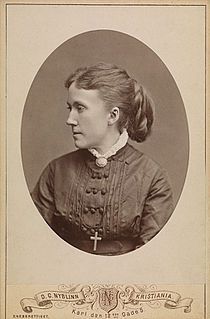
WErika Nissen, née Lie, also known as Erika Røring Møinichen Lie Nissen, was a Norwegian pianist.
 W
WAnna Georgine Rogstad was a Norwegian educator, women's rights activist and politician for the Liberal Left Party. She was the country's first female Member of Parliament. A teacher by profession, Rogstad was deeply involved in the educational policies of the nation. She also fought for women's rights, particularly the right to vote. In 1911 she met in parliament as a deputy representative for Jens Bratlie, and held this position full-time after Bratlie became Prime Minister in 1912.
 W
WMor Sæther, was a Norwegian "klok kone", that is, a herbalist. She is one of the best known within her profession in Norway.
 W
WProf Georg Ossian Sars HFRSE was a Norwegian marine and freshwater biologist.
 W
WOle Olsen Scheistrøen was a Norwegian architect and builder. Scheistrøen had no formal architectural education and he, in fact, referred to himself as a builder and not an architect. However, he designed about 50 Norwegian churches, in addition to designing twelve churches after drawings by other architects, including six by Jacob Wilhelm Nordan.
 W
WJohannes Klingenberg Sejersted was a Norwegian military officer.
 W
WNiels Arntzen Sem was a Norwegian politician.
 W
WEmil Stang was a Norwegian jurist and politician. He served as Prime Minister of Norway from 1889-1891 and again from 1893-1895. He also served as the first leader of the Conservative Party from 1884-1889, 1891-1893 and 1896-1899.
 W
WJohannes Wilhelm Christian Steen was a Norwegian educator who served as Prime Minister of Norway from 1891 to 1893 and from 1898 to 1902.
 W
WFerdinand Carl Maria Wedel-Jarlsberg was a Norwegian military officer and commanding general of the Royal Norwegian Army.
 W
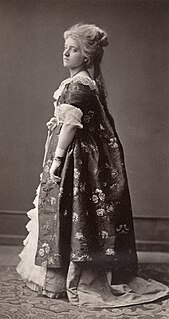
WIda Charlotte Clementine Wedel-Jarlsberg was a Norwegian courtier, artist, temperance activist, pacifist and feminist. She was a lady-in-waiting (hovfröken) of queen Sophia of Sweden.
 W
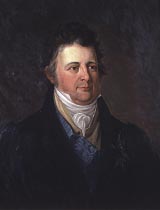
WJohan Caspar Herman Wedel Jarlsberg was a Norwegian statesman and count. He played an active role in the constitutional assembly at Eidsvoll in 1814 and was the first native Norwegian to hold the post of Governor-general of Norway with the authority of a viceroy, representing the absent king of Norway as head of the Norwegian cabinet during the union with Sweden.
 W
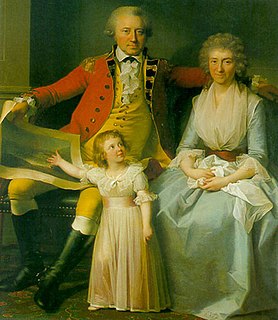
WKaren Wedel-Jarlsberg, née Anker, was a Norwegian countess and lady in waiting.
 W
WJohan Sebastian Cammermeyer Welhaven was a Norwegian author, poet, critic and art theorist. He has been considered "one of the greatest figures in Norwegian literature."
 W
WHarald Nicolai Storm Wergeland was a Norwegian military officer, politician and mountaineer. Having reached the rank of Major General by 1859, he served as Minister of the Army for several periods between 1857 and 1868. He later became Lieutenant General. He had several notable family members.
 W
WHenrik Arnold Thaulow Wergeland was a Norwegian writer, most celebrated for his poetry but also a prolific playwright, polemicist, historian, and linguist. He is often described as a leading pioneer in the development of a distinctly Norwegian literary heritage and of modern Norwegian culture.
 W
WNicolai Wergeland was a Norwegian priest, writer and politician, and a member of the Norwegian Constituent Assembly at Eidsvoll that wrote the Constitution of Norway on 17 May 1814. He was elected as one of two delegates from Christianssand to the Eidsvoll Assembly in 1814. He represented the unionist side, and came very well prepared to Eidsvoll, bringing his own constitution draft. Along with him from Christiansand came wholesaler Ole Clausen Mørch.