 W
WJames Edward Tierney Aitchison MD LLD CIE was a Scottish surgeon and botanist. He worked as British Commissioner to Ladakh, India in 1872 and collected numerous specimens from the region and published catalogues of plants including those of economic interest. The plant genus Aitchisonia was named after him by Helmsley but the name is no longer in use.
 W
WGeneral Sir James Edward Alexander was a Scottish traveller, author and soldier in the British Army.
 W
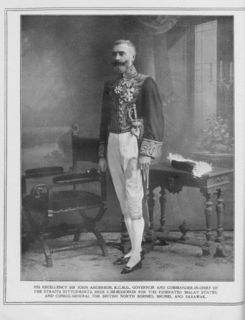
WSir John Anderson was a Scottish colonial administrator, who was once the Governor of Ceylon and Governor of Straits Settlements.
 W
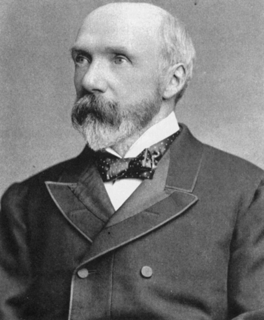
WJohn Anderson was a Scottish anatomist and zoologist who worked in India as the curator of the Indian Museum.
 W
WSir Robert Keith Arbuthnot, 2nd Baronet was a Scottish civil servant who served as Secretary to the Board of Trustees and Manufactures.
 W
WSir Andrew Balfour was a Scottish Medical Officer who specialised in tropical medicine. Balfour spent twelve years in Khartoum, Sudan and was the Medical Officer of Health in the city. As well as writing medical publications, Balfour also wrote historical fiction and fantasy novels, the majority of which were published from 1897 to 1903. In his youth Balfour was also a notable sportsman playing rugby union for Cambridge University in the Varsity Match and was selected to represent the Scotland national team.
 W
WFred Bremner (1863–1941) was a Scottish photographer. His portraiture work in British India, spanning 1882 to 1922, preserves a record of life in the period.
 W
WHugh Francis Clarke Cleghorn of Stravithie, FRSE FLS LLD was a Madras-born Scottish physician who worked in India and pioneered as a botanist and in forest conservancy. Cleghorn, sometimes known as the father of scientific forestry in India, was instrumental in the creation of the forest department in the Presidency of Madras. The plant genus Cleghornia was named after him by the botanist Robert Wight. Cleghorn returned to Scotland in 1869 and developed forestry education in Scotland and established a lecturership at the University of Edinburgh.
 W
WWilliam Clark Cowie was a Scottish engineer, mariner, and businessman who helped establish British North Borneo and was Chairman of the British North Borneo Company.
 W
WJohn Crawfurd was a Scottish physician, colonial administrator and diplomat, and author. He is now best known for his work on Asian languages, his History of the Indian Archipelago, and his role in founding Singapore as the last British Resident of Singapore; the position of Resident was replaced by the Governor of the Straits Settlements.
 W
WRobert Graham, who took the name Bontine in 1770 and Cunninghame Graham in 1796, was a Scottish politician and poet. He is now remembered for a poem If doughty deeds my lady please, which was later set to music by his great-great-grandson, Rev. Malise Cunninghame Graham and also by Sir Arthur Sullivan.
 W
WVery Rev Dr Alexander Duff, was a Christian missionary in India; where he played a large part in the development of higher education. He was a Moderator and Convenor of the Church of Scotland and an unashamed scientific liberal reformer of anglicized evangelism across the Empire. He was the first overseas missionary of the Church of Scotland to India. On 13 July 1830 he founded the General Assembly's Institution in Calcutta, now known as the Scottish Church College. He also played a part in establishing the University of Calcutta. He was twice Moderator of the Free Church of Scotland in 1851 and 1873, the only person to serve the role twice.
 W
WGeorge Dundas was a Scottish Tory politician and colonial administrator.
 W
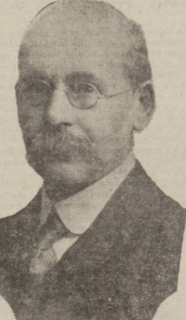
WJohn Nicol Farquhar was a Scottish educational missionary to Calcutta, and an Orientalist. He is one of the pioneers who popularised the Fulfilment theology in India that Christ is the crown of Hinduism, though, Fulfilment thesis in Bengal was built on foundation originally laid in Madras by William Miller.
 W
WHenry Faulds was a Scottish doctor, missionary and scientist who is noted for the development of fingerprinting.
 W
WJohn Galt was a Scottish novelist, entrepreneur, and political and social commentator. Galt has been called the first political novelist in the English language, due to being the first novelist to deal with issues of the Industrial Revolution.
 W
WAndrew Geddis was a leading business man and sports enthusiast in Bombay in the decades leading up to independence.
 W
WSir John Gladstone of Fasque, 1st Baronet, FRSE LLD was a Scottish merchant, slave owner, Member of Parliament, and the father of the British Prime Minister William Ewart Gladstone. Through his commercial activities he acquired several large plantations in Jamaica and Guyana, worked initially by enslaved Africans. A massive slave revolt centred on his estates was brutally crushed by the military. The extent of his ownership of slaves was such that after slavery was abolished in 1833, he received the largest of all compensation payments made by the Slave Compensation Commission. After the passage of the Slavery Abolition Act 1833, Gladstone expelled most African workers from his estates and imported large numbers of indebted Indian indentured-servants, through false promises of providing them schools and medical attention. However, upon arrival they were paid no wages, the repayment of their debts being deemed sufficient, and worked under conditions that continued to resemble slavery in everything except name.
 W
WCharles Grant, was a British politician influential in Indian and domestic affairs who, motivated by his evangelical Christianity, championed the causes of social reform and Christian mission, particularly in India. He served as Chairman of the British East India Company, and as a member of parliament (MP), and was an energetic member of the Clapham Sect. The "Clapham Sect" were a group of social activists who spoke out about the moral imperative to end slavery. Henry Thornton founder of the Clapham sect regarded Grant as his closest friend, after Wilberforce, and Grant planned and paid for a house called 'Glenelg' on Henry's estate in Battersea. It was a twin to, and lay near to the house built on the same estate for Wilberforce after his marriage, the location of which is marked by a plaque at No.111 Broomwood Road, west of that section of Battersea Rise now called Clapham Common West Side. Grant later moved to live in Russell Square.
 W
WHome Children was the child migration scheme founded by Annie MacPherson in 1869, under which more than 100,000 children were sent from the United Kingdom to Australia, Canada, New Zealand, and South Africa. The program was largely discontinued in the 1930s, but not entirely terminated until the 1970s.
 W
WSir Reginald Fleming Johnston, was a Scottish diplomat who served as the tutor and advisor to Puyi, the last Emperor of China. He was also the last British Commissioner of Weihaiwei.
 W
WHenry Brougham Loch, 1st Baron Loch, was a Scottish soldier and colonial administrator.
 W
WCatherine Theodora, Lady Macartney (1877-1949). Catherine was born in Bexley, Kent, England. She was the second daughter of James Borland born 1836 in Castle Douglas, Scotland. In 1898, she married Sir George Macartney, the British Consul in Kashgar. Catherine's father had studied in Scotland with George Macartney's father, Halliday Macartney.
 W
WZachary Macaulay was a Scottish statistician, one of the founders of London University and of the Society for the Suppression of Vice, an antislavery activist, and governor of Sierra Leone, the British colony for freed slaves. He worked endlessly to end the slave trade and to Christianize and improve the world.
 W
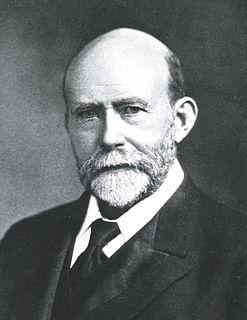
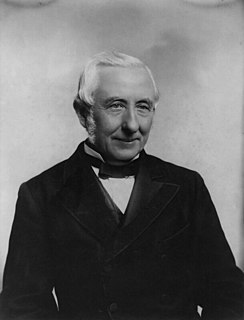
WSir William MacGregor, was a Lieutenant-Governor of British New Guinea, Governor of Newfoundland and Governor of Queensland.
 W
WSir William Mackinnon, 1st Baronet was a Scottish ship-owner and businessman who built up substantial commercial interests in India and East Africa. He established the British-India Steam Navigation Company and the Imperial British East Africa Company.
 W
WSir James Mackintosh FRS FRSE was a Scottish jurist, Whig politician and historian. His studies and sympathies embraced many interests. He was trained as a doctor and barrister, and worked also as a journalist, judge, administrator, professor, philosopher and politician.
 W
WGeorge Maclean was Governor of Gold Coast, now in Ghana, from 1830 until 1844.
 W
WDavid McLaren was a Scottish accountant and lay preacher who served as Resident Manager of the South Australian Company for the Colony of South Australia from 1837 to 1841.
 W
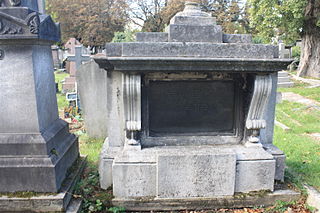
WSir Donald Friell McLeod was a Lieutenant Governor of British Punjab. He was one of the founders of Lahore Oriental College, now part of the Punjab University and is generally remembered as a philanthropic administrator and promoter of education.
 W
WSir William Muir, Order of the Star of India was a Scottish Orientalist, and colonial administrator, Principal of the University of Edinburgh and Lieutenant Governor of the North-West Provinces of India.
 W
WDr William Roxburgh FRSE FRCPE FLS was a Scottish surgeon and botanist who worked extensively in India, describing species and working on economic botany. He is known as the founding father of Indian botany. He published numerous works on Indian botany, illustrated by careful drawings made by Indian artists and accompanied by taxonomic descriptions of many plant species. Apart from the numerous species that he named, many species were named in his honour by his collaborators.
 W
WSir James George Scott was a Scottish journalist and colonial administrator who helped establish British colonial rule in Burma, and in addition introduced football to Burma.
 W
WJames Carmichael Smyth FRS FRCP was a Scottish physician and medical writer.
 W
WSamuel Vetch was a Scottish soldier and colonial governor of Nova Scotia. He was a leading figure in the Darien scheme, a failed Scottish attempt to colonise the Isthmus of Panama in the late 1690s. During the War of the Spanish Succession he was an early proponent of the idea that Great Britain should take New France, proposing in 1708 that it be conquered and that the residents of Acadia be deported. He was the grandfather of Samuel Bayard.
 W
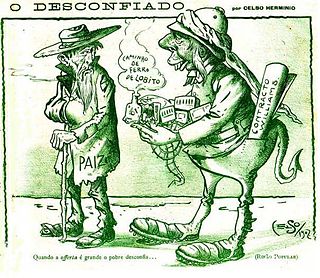
WSir Robert Williams, 1st Baronet, was a Scottish mining engineer, pioneering explorer of Africa, entrepreneur, and railroad developer who was chiefly responsible for the discovery of the vast copper deposits in Katanga Province and Northern Rhodesia.
 W
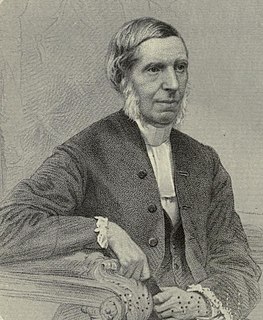
WRev Dr John Wilson DD FRS was a Scottish Christian missionary, orientalist and educator in the Bombay presidency, British India.
 W
WGeorge Yule (1829–1892) was a Scottish merchant in England and India who served as the fourth President of the Indian National Congress in 1888 at Allahabad, the first non-Indian to hold that office. He was founder of George Yule & Co. of London, and headed Andrew Yule & Co., of Calcutta. He served as Sheriff of Calcutta and as President of the Indian Chamber of Commerce.