 W
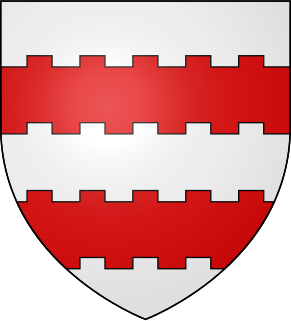
WJohn V, Lord of Arkel was Lord of Arkel, Haastrecht and Hagestein and stadtholder of Holland, Zeeland and West Frisia. He was a son of Lord Otto of Arkel and his wife, Elisabeth of Bar-Pierrepont.
WWilliam Otto, Lord of Arkel c. 1385 – 1 December 1417 in Gorinchem was the male member of the House of Arkel. He styled himself Lord of Arkel, although his father had lost control of Arkel in 1412, and William's attempt to regain it, failed. He positioned himself as a potential successor of the childless Duke Reinald IV of Guelders and Jülich; however, this attempt was also unsuccessful.
 W
WDirk van Brederode, died on his journey back from Palestina. He was buried in the Dominican church in Rheims.
WDirk III van Brederode was lord of Brederode.
WWalraven I van Brederode was Burgrave of Stavoren from 1400 to 1401, lord of Brederode from 1402 to 1417, and Stadtholder of Holland from 1416 to 1417.
 W
WWilliam Buckels, also known as Willem Beuckel, Willem Beuckelsz or William Buckelsson, and sometimes Willem Beuckelszoon by the Dutch, was a 14th-century fisherman from Biervliet, Zeeland, whose discovery of a preservation process for herring led to the Dutch as a maritime power.
 W
WJean d'Outremeuse or Jean des Preis was a writer and historian who wrote two romanticised historical works and a lapidary.
 W
WWillem Eggert, was a Dutch politician, noble, banker and schepen of Amsterdam. He owned much land in Weesp, Monnickendam, Oosthuizen, Aalsmeer and Wognum.
 W
WArnold I of Egmond, in Dutch Arnoud, Arend, or Arent van Egmond, was Lord of Egmond and IJsselstein.
WJohn I, Lord of Egmond was Lord of Egmond, Lord of IJsselstein, bailiff of Kennemerland (1353-1354) and stadtholder of Holland.
WJohn II, Lord of Egmond was the son of Arnold I of Egmond and Jolanthe of Leiningen . On 23 June 1409 John married Maria van Arkel daughter of John V van Arkel and Joanna of Jülich, and had two sons:Arnold, Duke of Guelders William IV, Count of Egmond
WWalter II, Lord of Egmond was Lord of Egmond.
 W
WFrank II of Borssele was a 15th-century Zeelandic nobleman.
 W
WGisbert VI of Bronckhorst-Borculo was a Dutch nobleman. He was a son of William IV of Bronckhorst and Kunigunde of Moers. He was the ruling Lord of Bronckhorst from 1399 until his death, and the ruling Lord of Borculo from 1402 until his death. He was the sixth Lord of Bronckhorst name Gisbert, but only the second who also ruled Borculo, which is why some authors call him Gisbert II of Bronckhorst-Borculo.
 W
WWitte van Haemstede (1280/1282–1321) was a bastard son of Floris V, Count of Holland. His half-brother John I, Count of Holland, gave him the property of Haamstede, in Southern Holland. He married Agnes van der Sluys, sometime before 1307. Their descendants were the Lords of Haamstede.
 W
WHenry V, Count of Gorizia was a Count of Gorizia from the Meinhardiner dynasty.
 W
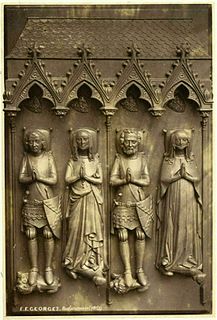
WArnold, Lord of IJsselstein was the second Lord of IJsselstein and Stoutenburg and Schout of Amersfoort and the Eem Valley.
 W
WJean de Hocsem or Jan van Hocsem, Latinized Johannes Hocsemius (1278–1348), was a canon and scholaster of Saint Lambert's Cathedral, Liège.
 W
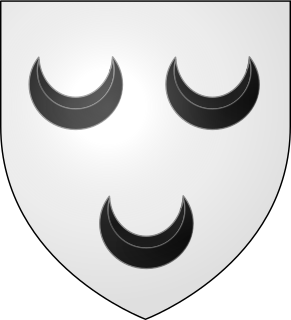
WJohn III of Wassenaer, Lord of Polanen was Lord of Polanen. The Lords of Polanen were a branch of the House of Wassenaer. He held extensive possessions besides the fief of Polanen.
WJohn IV, Lord of Arkel was Lord of Arkel from 1326 until his death.
WJohn I, Lord of Polanen was Lord of Polanen, Lord of De Lek and Lord of Breda.
 W
WJohn II, also called John the Peaceful, was Duke of Brabant, Lothier and Limburg (1294–1312). He was the son of John I of Brabant and Margaret of Flanders.
WJohn III, Lord of Polanen was Lord of Polanen, Lord of De Lek and Lord of Breda.
 W
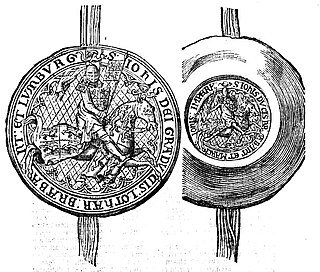
WJohn III was Duke of Brabant, Lothier, and Limburg (1312–1355). He was the son of John II, Duke of Brabant, and Margaret of England.
 W
WFoelke Kampana, also known as Foelke the Cruel, was a Frisian noble. She served as regent for the Frisian territories Oldeborg, Brokmerland, Auricherland and Emsigerland in East Frisia in 1400 during the absence of her son Keno II and in 1417 during the minority of her grandson Ocko II.
WOtto, Lord of Arkel was Lord of Arkel from 6 May 1360 until his death.
 W
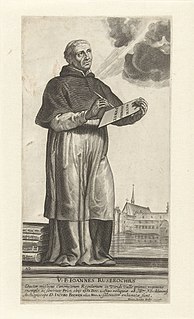
WThe Blessed John van Ruysbroeck, original Flemish name Jan van Ruusbroec was an Augustinian canon and one of the most important of the Flemish mystics. Some of his main literary works include The Kingdom of the Divine Lovers, The Twelve Beguines, The Spiritual Espousals, A Mirror of Eternal Blessedness, The Little Book of Enlightenment, and The Sparkling Stone. Some of his letters also survive, as well as several short sayings. He wrote in the Dutch vernacular, the language of the common people of the Low Countries, rather than in Latin, the language of the Church liturgy and official texts, in order to reach a wider audience.
 W
WWilliam I, Duke of Bavaria-Straubing, was the second son of Emperor Louis IV and Margaret II of Hainaut. He was also known as William V, Count of Holland, as William III, Count of Hainaut and as William IV, Count of Zeeland.
 W
WWilliam II was Count of Hainaut from 1337 until his death. He was also Count of Holland and Count of Zeeland. He succeeded his father, William I, and married Joanna of Brabant in 1334, but had no issue.