 W
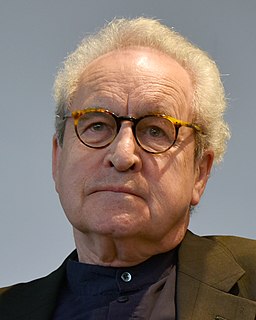
WWilliam John Banville is an Irish novelist, short story writer, adapter of dramas and screenwriter. Though he has been described as "the heir to Proust, via Nabokov", Banville himself maintains that W. B. Yeats and Henry James are the two real influences on his work.
 W
WJane Barlow was an Irish writer, noted for her novels and poems describing the lives of the Irish peasantry, chiefly about Lisconnel and Ballyhoy, in relation to both landlords and the Great Famine.
 W
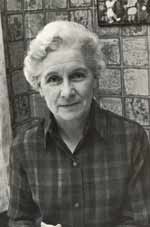
WMary Beckett (1926–2013) was an Irish author.
 W
WSamuel Barclay Beckett was an Irish novelist, playwright, short story writer, theatre director, poet, and literary translator. A resident of Paris for most of his adult life, he wrote in both French and English.
 W
WBrendan Francis Aidan Behan was an Irish poet, short story writer, novelist and playwright who wrote in both English and Irish. He was named by Irish Central as one of the greatest Irish writers of all time.
 W
WMaeve Binchy Snell was an Irish novelist, playwright, short story writer, columnist, and speaker. Her novels were characterised by a sympathetic and often humorous portrayal of small-town life in Ireland, and surprise endings. Her novels, which were translated into 37 languages, sold more than 40 million copies worldwide, and her death at age 73, announced by Vincent Browne on Irish television late on 30 July 2012, was mourned as the death of one of Ireland's best-loved and most recognisable writers.
 W
WElizabeth Bowen, CBE was an Irish-British novelist and short story writer, notable for her fiction about life in wartime London.
 W
WClare Boylan was an Irish author, journalist and critic for newspapers, magazines and many international broadcast media.
 W
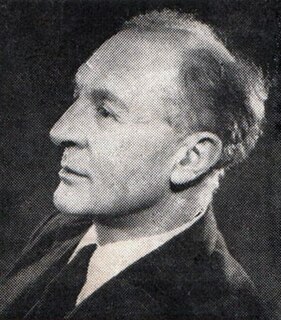
WArthur Joyce Lunel Cary was an Anglo-Irish novelist.
 W
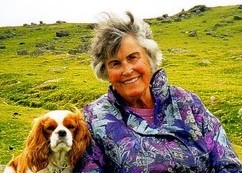
WJuanita Casey was a poet, playwright, novelist and artist as well as a horse and zebra trainer and breeder. Her writing celebrates her time in Ireland and the New Forest.
 W
WAustin Clarke, born in 83 Manor Street, Stoneybatter, Dublin, was one of the leading Irish poets of the generation after W. B. Yeats. He also wrote plays, novels and memoirs. Clarke's main contribution to Irish poetry was the rigour with which he used technical means borrowed from classical Irish language poetry when writing in English.
 W
WBrian Brendon Talbot Cleeve was a writer, whose published works include twenty-one novels and over a hundred short stories. He was also an award-winning broadcaster on RTÉ television. Son of an Irish father and English mother, he was born and raised in England. He lived in South Africa during the early years of National Party rule and was expelled from the country because of his opposition to apartheid. In his early thirties he moved to Ireland where he lived for the remainder of his life. In late middle age he underwent a profound spiritual experience, which led him to embrace mysticism. He developed a model for the spiritual life based on the principle of obedience to the will of God.
 W
WEoin Colfer is an Irish author of children's books. He worked as a primary school teacher before he became a full-time writer. He is best known for being the author of the Artemis Fowl series. In September 2008, Colfer was commissioned to write the sixth instalment of the Hitchhiker's Guide to the Galaxy series, entitled And Another Thing ..., which was published in October 2009. In October 2016, in a contract with Marvel Comics, he released Iron Man: The Gauntlet. He served as Laureate na nÓg between 2014 and 2016.
 W
WMáirín Cregan was an Irish nationalist who was involved in the 1916 Easter Rising and Irish War of Independence. She later made her name writing for children, as well as writing plays and novels for adults.
 W
WFreeman Wills Crofts FRSA was an Irish mystery author, best remembered for the character of Inspector Joseph French.
 W
WGeraldine Dorothy Cummins (1890–1969) was an Irish spiritualist medium, novelist and playwright. She began her career as a creative writer, but increasingly concentrated on mediumship and "channelled" writings, mostly about the lives of Jesus and Saint Paul, though she also published on a range of other topics.
 W
WSuzanne Rouviere Day (1876–1964) was an Irish feminist, novelist and playwright. She founded the Munster Women's Franchise League, was one of Cork's first women poor-law guardians and served a support role in both World Wars.
 W
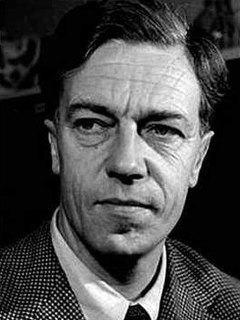
WCecil Day-Lewis, often written as C. Day-Lewis, was an Anglo-Irish poet and Poet Laureate from 1968 until his death in 1972. He also wrote mystery stories under the pseudonym of Nicholas Blake.
 W
WEilís Dillon FRSL was an Irish author of 50 books. Her work has been translated into 14 languages.
 W
WEmma Donoghue is an Irish-Canadian playwright, literary historian, novelist, and screenwriter. Her 2010 novel Room was a finalist for the Man Booker Prize and an international best-seller. Donoghue's 1995 novel Hood won the Stonewall Book Award. and Slammerkin (2000) won the Ferro-Grumley Award for Lesbian Fiction. She is a 2011 recipient of the Alex Awards. Room was adapted by Donoghue into a film of the same name. For this, she was nominated for the Academy Award for Best Adapted Screenplay.
 W
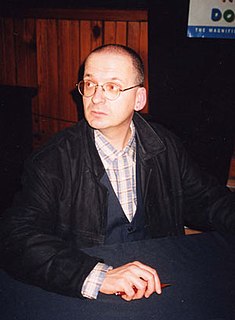
WRoddy Doyle is an Irish novelist, dramatist and screenwriter. He is the author of eleven novels for adults, eight books for children, seven plays and screenplays, and dozens of short stories. Several of his books have been made into films, beginning with The Commitments in 1991. Doyle's work is set primarily in Ireland, especially working-class Dublin, and is notable for its heavy use of dialogue written in slang and Irish English dialect. Doyle was awarded the Booker Prize in 1993 for his novel Paddy Clarke Ha Ha Ha.
 W
WAnne Teresa Enright is an Irish writer. She has published half a dozen novels, many short stories and a non-fiction work called Making Babies: Stumbling into Motherhood, about the birth of her two children. Her writing explores themes such as family, love, identity and motherhood.
 W
WJames Gordon Farrell was an English-born novelist of Irish descent who spent much of his childhood in Ireland. He gained prominence for a series of novels known as "the Empire Trilogy", which deal with the political and human consequences of British colonial rule.
 W
WMannix Flynn is an Irish independent politician who has served as a Dublin City Councillor since May 2009.
 W
WBeatrice Ethel Grimshaw was a writer and traveller of Irish origin, for many years based in Papua New Guinea.
 W
WRosamond Jacob was an Irish writer and activist.
 W
WJames Augustine Aloysius Joyce was an Irish novelist, short story writer, poet, teacher, and literary critic. He contributed to the modernist avant-garde movement and is regarded as one of the most influential and important writers of the 20th century. Joyce is best known for Ulysses (1922), a landmark work in which the episodes of Homer's Odyssey are paralleled in a variety of literary styles, most famously stream of consciousness. Other well-known works are the short-story collection Dubliners (1914), and the novels A Portrait of the Artist as a Young Man (1916) and Finnegans Wake (1939). His other writings include three books of poetry, a play, his published letters and occasional journalism.
 W
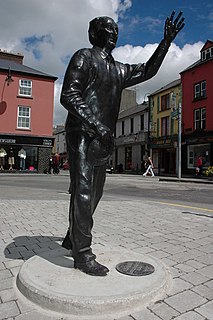
WJohn Brendan Keane was an Irish playwright, novelist and essayist from Listowel, County Kerry.
 W
WBrendan Kennelly is an Irish poet and novelist. Now retired from teaching, he was Professor of Modern Literature at Trinity College, Dublin until 2005. Since his retirement he has been titled "Professor Emeritus" by Trinity College. He is father to one daughter, Doodle Kennelly and is also grandfather to Doodle's three daughters: Meg, Hannah and Grace.
 W
WBenedict "Ben" Kiely was an Irish writer and broadcaster from Omagh, County Tyrone.
 W
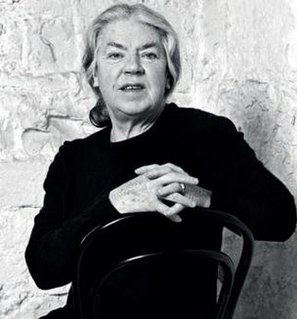
WMary Josephine Lavin wrote short stories and novels. An Irishwoman, she is now regarded as a pioneer in the field of women's writing. The well-known Irish writer Lord Dunsany mentored Lavin after her father approached him on her behalf to discuss with him some stories she had written.
 W
WDorothy Macardle was an Irish writer, novelist, playwright, and non-academic historian. Her book, The Irish Republic, is one of the more frequently cited narrative accounts of the Irish War of Independence and its aftermath, particularly for its exposition of the anti-treaty viewpoint.
 W
WMary Manning Howe Adams was an Irish novelist, playwright and film critic.
 W
WJohn McGahern was an Irish writer and novelist. He is regarded as one of the most important writers of the latter half of the twentieth century.
 W
WJanet McNeill was a prolific Irish novelist and playwright. Author of more than 20 children's books, as well as adult novels, plays, and two opera libretti, she was best known for her children's comic fantasy series My Friend Specs McCann.
 W
WL. T. Meade was the pseudonym of Elizabeth Thomasina Meade Smith (1844–1914), a prolific writer of girls' stories. She was born in Bandon, County Cork, Ireland, daughter of Rev. R. T. Meade, of Nohoval, County Cork. She later moved to London, where she married Alfred Toulmin Smith in September 1879.
 W
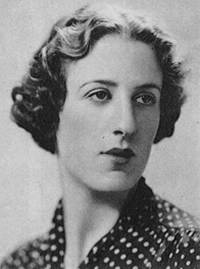
WBetty Miller was an Irish author of both literary fiction and non-fiction. She wrote her first novel, The Mere Living (1933), whilst studying journalism at University College, London. Her literary reputation was established by the publication of her biography of Robert Browning (1952), which earned her election to the Royal Society of Literature. After the Second World War she wrote extensively for literary journals including Horizon, The Cornhill Magazine and The Twentieth Century. Of her seven novels, two are still in print: Farewell, Leicester Square (1941), published by Persephone Books in 2000, and On the Side of the Angels (1945), published by Capuchin Classics in 2012.
 W
WGeorge Augustus Moore was an Irish novelist, short-story writer, poet, art critic, memoirist and dramatist. Moore came from a Roman Catholic landed family who lived at Moore Hall in Carra, County Mayo. He originally wanted to be a painter, and studied art in Paris during the 1870s. There, he befriended many of the leading French artists and writers of the day.
 W
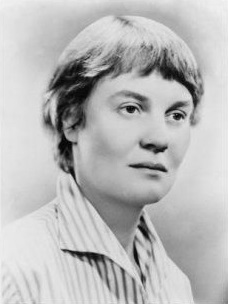
WDame Jean Iris Murdoch was an Irish and British novelist and philosopher. Murdoch is best known for her novels about good and evil, sexual relationships, morality, and the power of the unconscious. Her first published novel, Under the Net, was selected in 1998 as one of Modern Library's 100 best English-language novels of the 20th century. Her 1978 novel The Sea, the Sea won the Booker Prize. In 1987, she was made a Dame by Queen Elizabeth II for services to literature. In 2008, The Times ranked Murdoch twelfth on a list of "The 50 greatest British writers since 1945".
 W
WÁine Ní Ghlinn is a bilingual Irish journalist, poet, playwright and children's writer. She is the current Laureate na nÓg, 2020—2022, the first to write exclusively in Irish.
 W
WJosephine Edna O'Brien is an Irish novelist, memoirist, playwright, poet and short story writer. Philip Roth described her as "the most gifted woman now writing in English", while a former President of Ireland, Mary Robinson, cited her as "one of the great creative writers of her generation".
 W
WKate O'Brien was an Irish novelist and playwright.
 W
WBrendan O'Carroll is an Irish writer, producer, comedian, actor, and director, best known for portraying foul-mouthed matriarch Agnes Brown on stage, and in the BBC and RTÉ television sitcom Mrs. Brown's Boys. In 2015, O'Carroll was awarded the Irish Film and Television Academy Lifetime Achievement Award for his contribution to Irish television.
 W
WPeadar O'Donnell was one of the foremost radicals of 20th-century Ireland. O'Donnell became prominent as an Irish republican, socialist activist, politician and writer.
 W
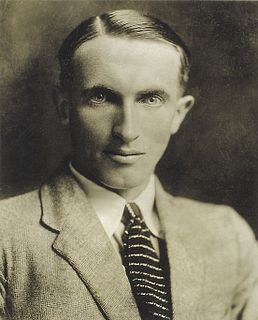
WLiam O'Flaherty was a major Irish novelist, short-story writer and must be ranked as one of the foremost socialist writers in the first part of the 20th century, writing about the common people's experience and from their perspective. Others are Seán O'Casey, Pádraic Ó Conaire, Peadar O'Donnell, Máirtín Ó Cadhain, and Seosamh Mac Grianna, all of them Irish language speakers who chose to write either in Irish or English.
 W
WBreandán Ó hEithir was an Irish writer and broadcaster.
 W
WJoseph O'Neill was an Irish novelist.
 W
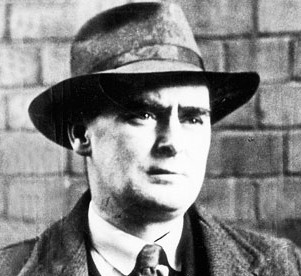
WBrian O'Nolan, better known by his pen name Flann O'Brien, was an Irish novelist, playwright and satirist, considered a major figure in twentieth century Irish literature. Born in Strabane, County Tyrone, he is regarded as a key figure in modernist and postmodern literature. His English language novels, such as At Swim-Two-Birds and The Third Policeman, were written under the O’Brien pen name. His many satirical columns in The Irish Times and an Irish language novel An Béal Bocht were written under the name Myles na gCopaleen.
 W
WEdward John Moreton Drax Plunkett, 18th Baron of Dunsany, was an Anglo-Irish writer and dramatist; his work, mostly in the fantasy genre, was published under the name Lord Dunsany. More than ninety books of his work were published in his lifetime, and both original work and compilations have continued to appear. Dunsany's œuvre includes many hundreds of published short stories, as well as plays, novels and essays. He achieved great fame and success with his early short stories and plays, and during the 1910s was considered one of the greatest living writers of the English-speaking world; he is today best known for his 1924 fantasy novel The King of Elfland's Daughter and The Gods of Pegāna, wherein he devised his own fictional pantheon and laid the groundwork for the fantasy genre. He was the inventor of an asymmetric version of chess called Dunsany's chess.
 W
WKatherine Frances Purdon was an Irish novelist and playwright, part of the Irish Revival movement and a member of the United Irishwomen.
 W
WJames Stephens was an Irish novelist and poet.
 W
WAbraham "Bram" Stoker was an Irish author, best known today for his 1897 Gothic horror novel Dracula. During his lifetime, he was better known as the personal assistant of actor Sir Henry Irving and business manager of the Lyceum Theatre, which Irving owned.
 W
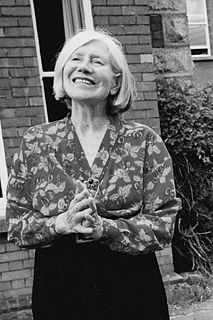
WEithne Strong was a bilingual Irish poet and writer who wrote in both Irish and English. Her first poems in Irish were published in Combar and An Glor 1943-44 under the name Eithne Ni Chonaill. She was a founder member of the Runa Press whose early Chapbooks featured artwork by among others Jack B. Yeats, Sean Keating, Sean O'Sullivan, Harry Kernoff among others. The press was noted for the publication in 1943 of 'Marrowbone Lane by Robert Collis which depicts the fierce fighting that took place during the Easter Rising of 1916.
 W
WHenry Francis Montgomery Stuart was an Irish writer. He was awarded one of the highest artistic accolades in Ireland, being elected a Saoi of Aosdána, before his death in 2000. His years in Nazi Germany led to a great deal of controversy.
 W
WColm Tóibín FRSL, is an Irish novelist, short story writer, essayist, playwright, journalist, critic, and poet.
 W
WRobert Noonan, born Robert Croker and best known by the pen name Robert Tressell, was an Irish writer best known for his novel The Ragged-Trousered Philanthropists.
 W
WEthel Lilian Voynich, née Boole was an Irish novelist and musician, and a supporter of several revolutionary causes. She was born in Cork, but grew up in England. Voynich was a significant figure, not only on the late Victorian literary scene, but also in Russian émigré circles. She is best known for her novel The Gadfly, which became hugely popular in her lifetime, especially in Russia.
 W
WMervyn Wall (1908–1997) was an Irish writer who was born in Dublin. Wall attended Belvedere College and worked as a civil servant 1934–48, for Radio Éireann from 1948–57, and as Secretary of the Arts Council for 1957–75. His wife, Frances Feehan, was a theatre and music critic.