 W
WAelred of Rievaulx ; also Ailred, Ælred, and Æthelred; was an English Cistercian monk, abbot of Rievaulx from 1147 until his death, and known as a writer. He is regarded by Anglicans and Catholics as a saint.
 W
WLancelot Andrewes was an English bishop and scholar, who held high positions in the Church of England during the reigns of Elizabeth I and James I. During the latter's reign, Andrewes served successively as Bishop of Chichester, of Ely, and of Winchester and oversaw the translation of the King James Version of the Bible. In the Church of England he is commemorated on 25 September with a Lesser Festival.
 W
WWilliam James Early Bennett was an Anglican priest. Bennett is celebrated for having provoked the decision that the doctrine of the Real Presence is a dogma not inconsistent with the creed of the Church of England. This followed the publication of his pamphlet A Plea for Toleration in the Church of England (1867) in the form of a letter to Edward Bouverie Pusey.
 W
WOfspring Blackall, Bishop of Exeter and religious controversialist, was born in London.
 W
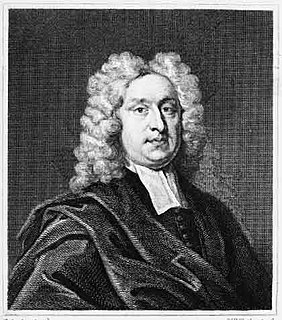
WJoseph Butler was an English Anglican bishop, theologian, apologist, and philosopher. He was born in Wantage in the English county of Berkshire. He is known, among other things, for his critique of Deism, Thomas Hobbes's egoism, and John Locke's theory of personal identity. Butler influenced many philosophers and religious thinkers, including David Hume, Thomas Reid, Adam Smith, Henry Sidgwick, John Henry Newman, and C. D. Broad, and is widely considered "as one of the preeminent English moralists." He also played an important, though under appreciated, role in the development of eighteenth-century economic discourse, greatly influencing the Dean of Gloucester and political economist Josiah Tucker.
 W
WEdmund Calamy was an English Nonconformist churchman and historian.
 W
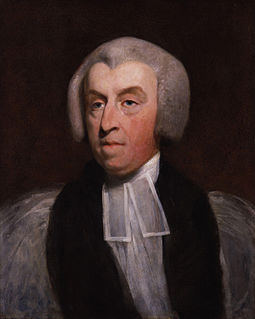
WFolliott Herbert Walker Cornewall was an English bishop of three sees.
 W
WTobias Crisp D.D. (1600–1643) was an English clergyman and reputed antinomian. In the end he proved a divisive figure for English Calvinists, with a serious controversy arising from the republication of his works in the 1690s.
 W
WWilliam Fleetwood was an English preacher, Bishop of St Asaph and Bishop of Ely, remembered by economists and statisticians for constructing a price index in his Chronicon Preciosum of 1707.
 W
WThe Reverend William Gaskell was an English Unitarian minister, charity worker and pioneer in the education of the working class. The husband of novelist and biographer Elizabeth Gaskell, he was himself a writer and poet.
 W
WAndrew Gifford (1700–1784) was an English Baptist minister and numismatist.
 W
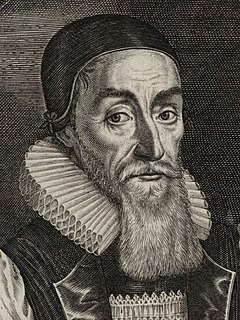
WJoseph Hall was an English bishop, satirist and moralist. His contemporaries knew him as a devotional writer, and a high-profile controversialist of the early 1640s. In church politics, he tended in fact to a middle way.
 W
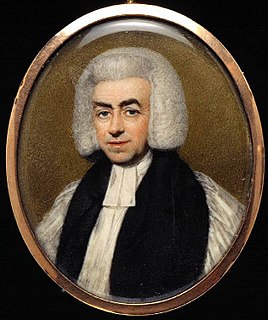
WSamuel Hallifax or Halifax (1733–1790) was an English churchman and academic, holder of several chairs at Cambridge and bishop of two sees.
 W
WRobert Hay, known later as Robert Hay-Drummond of Cromlix and Innerpeffray, was Archbishop of York from 1761 to 1776.
 W
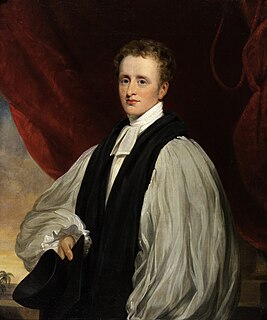
WReginald Heber was an English bishop, man of letters and hymn-writer. After 16 years as a country parson, he served as Bishop of Calcutta until his death at the age of 42. The son of a rich landowner and cleric, Heber gained fame at the University of Oxford as a poet. After graduation he made an extended tour of Scandinavia, Russia and Central Europe. Ordained in 1807, he took over his father's old parish, Hodnet, Shropshire. He also wrote hymns and general literature, including a study of the works of the 17th-century cleric Jeremy Taylor.
 W
WPhilip Henry was an English Nonconformist clergyman and diarist. His son Matthew Henry was a notable commentator on the Bible and also a Presbyterian minister.
 W
WAnthony Horneck was a German Protestant clergyman and scholar who made his career in England. He became an influential evangelical figure in London from the later 1670s, in partnership with Richard Smithies, curate of St Giles Cripplegate.
 W
WJoseph Hussey (1660–1726) was an English Calvinist and congregationalist minister.
 W
WSamuel Johnson, often referred to as Dr Johnson, was an English writer who made lasting contributions to English literature as a poet, playwright, essayist, moralist, literary critic, biographer, editor, and lexicographer. Religiously, he was a devout Anglican, and politically a committed Tory. The Oxford Dictionary of National Biography describes Johnson as "arguably the most distinguished man of letters in English history". He is the subject of James Boswell's The Life of Samuel Johnson, described by Walter Jackson Bate as "the most famous single work of biographical art in the whole of literature".
 W
WCharles Kingsley was a broad church priest of the Church of England, a university professor, social reformer, historian, novelist and poet. He is particularly associated with Christian socialism, the working men's college, and forming labour cooperatives that failed, but led to the working reforms of the progressive era. He was a friend and correspondent of Charles Darwin.
 W
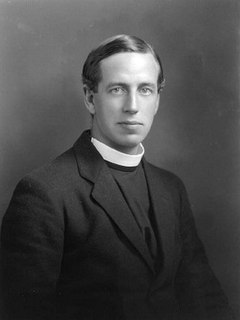
WRonald Arbuthnott Knox was an English Catholic priest, theologian, radio broadcaster, and author of detective stories. He is known for his "Ten Commandments" of Detective Fiction that describe a philosophy of writing in which the reader can participate, attempting to find a solution to the mystery before the fictional detective reveals it.
 W
WJoseph Barber Lightfoot, known as J. B. Lightfoot, was an English theologian and Bishop of Durham.
 W
WHerbert Lockyer (1886–1984) was a minister and best-selling author of over 50 books, including the 21-volume "All" series. He was educated at Glasgow Bible Institute, afterwards receiving honorary degrees at Northwestern Evangelical Seminary, and the International Academy in London. He was most influential, however, after crossing the Atlantic to preach and write in the United States.
 W
WJohn Frederick Denison Maurice (1805–1872), known as F. D. Maurice, was an English Anglican theologian, a prolific author, and one of the founders of Christian socialism. Since World War II, interest in Maurice has expanded.
 W
WHerbert John Ignatius McCabe was an English-born Irish Dominican priest, theologian and philosopher.
 W
WJohn Henry Newman was an English theologian and poet, first an Anglican priest and later a Catholic priest and cardinal, who was an important and controversial figure in the religious history of England in the 19th century. He was known nationally by the mid-1830s, and was canonised as a saint in the Catholic Church in 2019.
 W
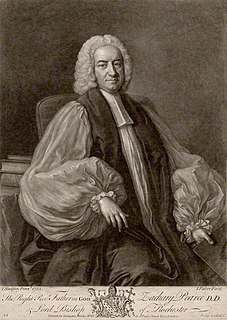
WZachary Pearce, sometimes known as Zachariah, was an English Bishop of Bangor and Bishop of Rochester. He was a controversialist and a notable early critical writer defending John Milton, attacking Richard Bentley's 1732 edition of Paradise Lost the following year.
 W
WThe Rev. Samuel Eyles Pierce was an English preacher, theologian, and Calvinist divine. A Dissenter from the Honiton area, Pierce was an evangelical church minister aligned with Calvinist Baptist theology. He wrote more than fifty books and many sermons.
 W
WWilliam Morley Punshon was an English Nonconformist minister.
 W
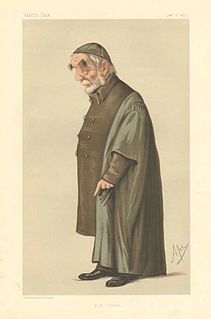
WEdward Bouverie Pusey was an English churchman, for more than fifty years Regius Professor of Hebrew at the University of Oxford. He was one of the leading figures in the Oxford Movement.
 W
WFrederick William Robertson, known as Robertson of Brighton, was an English divine.
 W
WRobert Sanderson was an English theologian and casuist.
 W
WThomas Secker was the Archbishop of Canterbury in the Church of England.
 W
WThomas Sherlock was a British divine who served as a Church of England bishop for 33 years. He is also noted in church history as an important contributor to Christian apologetics.
 W
WThomas Vowler Short was an English academic and clergyman, successively Bishop of Sodor and Man and Bishop of St Asaph.
 W
WCharles Haddon Spurgeon was an English Particular Baptist preacher. Spurgeon remains highly influential among Christians of various denominations, among whom he is known as the "Prince of Preachers". He was a strong figure in the Reformed Baptist tradition, defending the 1689 London Baptist Confession of Faith, and opposing the liberal and pragmatic theological tendencies in the Church of his day.
 W
WLaurence Sterne was an Anglo-Irish novelist and an Anglican clergyman. He wrote the novels The Life and Opinions of Tristram Shandy, Gentleman and A Sentimental Journey Through France and Italy, and also published many sermons, wrote memoirs, and was involved in local politics. Sterne died in London after years of fighting tuberculosis.
 W
WJohn Thomas (1691–1766) was an English Bishop of Lincoln and Bishop of Salisbury.
 W
WRalph Venning was an English nonconformist Christian.
 W
WWilliam Ward (1769–1823) was an English pioneer Baptist missionary, author, printer and translator.
 W
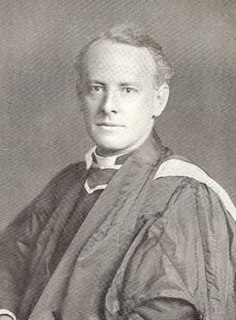
WLeslie Dixon Weatherhead was an English Christian theologian in the liberal Protestant tradition. Weatherhead was noted for his preaching ministry at City Temple in London and for his books, including The Will of God, The Christian Agnostic, and Psychology, Religion, and Healing.
 W
WJohn Wesley was an English cleric, theologian and evangelist who was a leader of a revival movement within the Church of England known as Methodism. The societies he founded became the dominant form of the independent Methodist movement that continues to this day.
 W
WGeorge Whitefield, also known as George Whitfield, was an Anglican cleric and evangelist who was one of the founders of Methodism and the evangelical movement.
 W
WNicholas Patrick Stephen Wiseman was a Cardinal of the Catholic Church who became the first Archbishop of Westminster upon the re-establishment of the Catholic hierarchy in England and Wales in 1850.