 W
WAbe no Nakamaro , whose Chinese name was Chao Heng, was a Japanese scholar and waka poet of the Nara period. He served on a Japanese envoy to Tang-dynasty China and served as the Tang jiedushi (governor) of Annam.
 W
WMitsuo Aida was a Japanese poet and calligrapher known as The Poet of Zen. His work was influenced by Zen Buddhism and he is known for his works, Ningen damono, Okagesan, and Inochi ippai.
 W
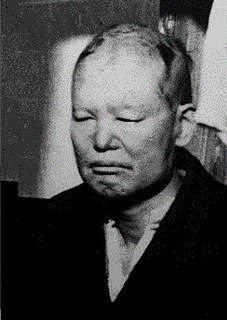
WKaijin Akashi was the pen name of Shōtarō Noda, a Japanese poet whose writing was inspired by his diagnosis of leprosy and confinement to a leper colony.
 W
WAriwara no Yukihira was a Japanese Heian period courtier and bureaucrat, who held a number of positions over the course of his life. At one time or another, he was governor of the provinces of Harima, Bizen, Shinano, and Bitchū. He also served as Councillor , Minister of Agriculture , and inspector (azechi) of Mutsu and Dewa provinces.
 W
WAriwara no Narihira was a Japanese courtier and waka poet of the early Heian period. He was named one of both the Six Poetic Geniuses and the Thirty-Six Poetic Geniuses, and one of his poems was included in the Ogura Hyakunin Isshu collection. He is also known as Zai Go-Chūjō, Zai Go, Zai Chūjō or Mukashi-Otoko.
 W
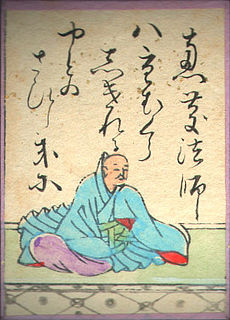
WEgyō was a Japanese waka poet of the mid-Heian period. One of his poems was included in the Ogura Hyakunin Isshu. He produced a private collection, the Egyō-hōshi-shū, and was listed as one of the Late Classical Thirty-Six Immortals of Poetry.
 W
WFujiwara no Asatada was a middle Heian waka and Japanese nobleman. He was designated a member of the Thirty-six Poetry Immortals and one of his poems is included in the famous anthology Hyakunin Isshu.
 W
WFujiwara no Atsutada was a mid-Heian waka and Japanese nobleman.
 W
WFujiwara no Kiyotada was a Japanese poet, in particular one of the Thirty-six Poetry Immortals. He was the second son of Fujiwara no Kanesuke, also one of the Thirty-six Poetry Immortals. Though his mother's name was not recorded, the Gosen Wakashū, an anthology of Japanese poems, mentions the name "Mother of Kiyotada" (清正母). His elder brother was Masatada.
 W
WFun'ya no Yasuhide was an early Heian period poet, included in the Rokkasen and in the Thirty-six Poetry Immortals. He attained upper sixth rank.
 W
WGyōson , also known as the Abbot of Byōdō-in , was a Japanese Tendai monk and waka poet of the late-Heian period. He became chief prelate of the Enryaku-ji temple in Kyoto, and one of his poems was included in the Ogura Hyakunin Isshu. Almost fifty of his poems were included in imperial anthologies, and he produced a private collection of poetry.
 W
WSakutarō Hagiwara was a Japanese writer of free verse, active in the Taishō and early Shōwa periods of Japan. He liberated Japanese free verse from the grip of traditional rules, and he is considered the "father of modern colloquial poetry in Japan". He published many volumes of essays, literary and cultural criticism, and aphorisms over his long career. His unique style of verse expressed his doubts about existence, and his fears, ennui, and anger through the use of dark images and unambiguous wording.
 W
WHarukichi Shimoi was a Japanese poet and writer.
 W
WHarumichi no Tsuraki was a poet who lived in the mid-Heian period. His father was Harumichi no Niina, a descendant of the Mononobe clan.
 W
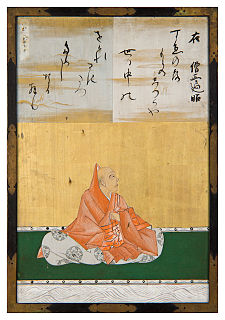
WYoshimine no Munesada (良岑宗貞), better known as Henjō , was a Japanese waka poet and Buddhist priest.
 W
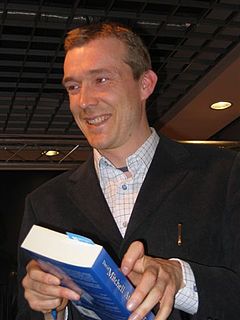
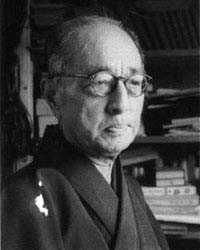
WDavid Stephen Mitchell is an English novelist and screenwriter.
 W
WKōnosuke Hinatsu was the pen-name of a Japanese poet known for his romantic and gothic poetry patterned after English literature. His real name was Kunito Higuchi.
 W
WHirose Tanso was a neo-Confucian scholar, teacher and Japanese writer.
 W
WTatsuo Hori was a writer, poet, and translator in Shōwa period Japan.
 W
WTomoji Ishizuka was the pen-name of Ishizuka Tomoji, a Japanese haiku poet and novelist active during the Shōwa period of Japan.
 W
WKakinomoto no Hitomaro was a Japanese waka poet and aristocrat of the late Asuka period. He was the most prominent of the poets included in the Man'yōshū, the oldest waka anthology, but apart from what can be gleaned from hints in the Man'yōshū, the details of his life are largely uncertain. He was born to the Kakinomoto clan, based in Yamato Province, probably in the 650s, and likely died in Iwami Province around 709.
 W
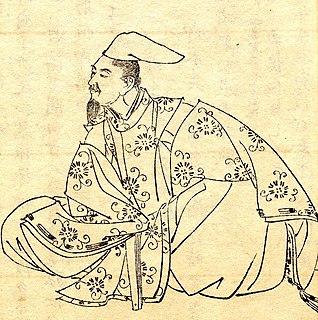
WKi no Tsurayuki was a Japanese author, poet and courtier of the Heian period. He is best known as the principal compiler of the Kokin Wakashū, also writing its Japanese Preface, and as a possible author of the Tosa Diary, although this was published anonymously.
 W
WKitamura Tōkoku was the pen name of Kitamura Montarō (北村門太郎), a Japanese poet, essayist, and one of the founders of the modern Japanese romantic literary movement in the late Meiji period of Japan.
 W
WMantarō Kubota was a Japanese author, playwright, and poet.
 W
WKūkai, also known posthumously as Kōbō Daishi , was a Japanese Buddhist monk, civil servant, engineer, scholar, poet, artist and calligrapher who founded the esoteric Shingon school of Buddhism. He travelled to China, where he studied Tangmi under the monk Huiguo. Upon returning to Japan, he founded Shingon—the Japanese branch of Vajrayana Buddhism. With the blessing of several Emperors, Kūkai was able to preach Shingon teachings and found Shingon temples. Like other influential monks, Kūkai oversaw public works and constructions. Mount Kōya was chosen by him as a holy site, and he spent his later years there until his death in 835 AD.
 W
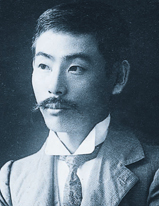
WDoppo Kunikida was a Japanese author of novels and romantic poetry during the Meiji period, noted as one of the inventors of Japanese naturalism.
 W
WMasao Miki , better known by his pen name Rofū Miki , was a Japanese poet, children's book author and essayist. He is considered a significant representative of Japanese symbolism.
 W
WMinamoto no Shigeyuki was an early Heian waka poet and nobleman. He was designated a member of the Thirty-six Poetry Immortals and one of his poems is included in the famous anthology Hyakunin Isshu. His remaining works include a poetry collection known as the Shigeyukishū (重之集).
 W
WŌe no Chisato (大江千里) was a Japanese waka poet and Confucian scholar of the late ninth and early tenth centuries. His exact birth and death dates are unknown but he flourished around 889 to 923. He was one of the Chūko Sanjūrokkasen and one of his poems was included in the Ogura Hyakunin Isshu.
 W
WŌe no Otondo was a Japanese courtier, Confucian scholar and kanshi poet of the early Heian period.
 W
WŌmi no Mifune was a Japanese scholar and writer of kanshi and kanbun, who lived in the Nara period of Japanese history.
 W
WŌtomo no Yakamochi was a Japanese statesman and waka poet in the Nara period. He is a member of the Thirty-six Poetry Immortals . He was born into the prestigious Ōtomo clan; his grandfather was Ōtomo no Yasumaro and his father was Ōtomo no Tabito. Ōtomo no Sakanoue no Iratsume was his aunt.
 W
WTōson Shimazaki was the pen-name of Shimazaki Haruki, a Japanese author, active in the Meiji, Taishō and early Shōwa periods of Japan. He began his career as a romantic poet, but went on to establish himself as a major proponent of naturalism in Japanese fiction.
 W
WSion Sono is a Japanese filmmaker, author, and poet. Best known on the festival circuit for the film Love Exposure (2008), he has been called "the most subversive filmmaker working in Japanese cinema today".
 W
WSosei was a Japanese waka poet and Buddhist priest. He is listed as one of the Thirty-six Poetry Immortals, and one of his poems was included in the famous anthology Hyakunin Isshu. His father Henjō was also a waka poet and monk.
 W
WSugawara no Michizane , also known as Kan Shōjō (菅丞相) or Kanke (菅家), was a scholar, poet, and politician of the Heian Period of Japan. He is regarded as an excellent poet, particularly in Kanshi poetry, and is today revered in Shinto as the god of learning, Tenman-Tenjin .
 W
WShūji Terayama was an Japanese avant-garde poet, dramatist, writer, film director, and photographer. His works range from radio drama, experimental television, underground (Angura) theatre, countercultural essays, to Japanese New Wave and "expanded" cinema.
 W
WYamabe no Akahito was a poet of the Nara period in Japan. The Man'yōshū, an ancient anthology, contains 13 chōka and 37 tanka of his. Many of his poems were composed during journeys with Emperor Shōmu between 724 and 736. Yamabe is regarded as one of the kami of poetry, and is called Waka Nisei along with Kakinomoto no Hitomaro. He is noted as one of the Thirty-six Poetry Immortals.
 W
WTekkan Yosano was the pen-name of Yosano Hiroshi, a Japanese author and poet active in late Meiji, Taishō, and early Shōwa period Japan. His wife was fellow author Yosano Akiko. Cabinet minister and politician Kaoru Yosano is his grandson.
 W
WCount Isamu Yoshii was a Japanese tanka poet and playwright active in Taishō and Shōwa period Japan. Attracted to European romanticism in his youth, his later works were more subdued.
 W
WEmperor Yūryaku was the 21st legendary Emperor of Japan, according to the traditional order of succession. He is remembered as a patron of sericulture.