 W
WThe Amiot 120 was a family of French single-engine biplane bomber aircraft, built by the SECM-Amiot factory in the mid-1920s. The only series-built variant was Amiot 122 BP3 medium bomber, other known variant was Amiot 123 long-distance record plane.
 W
WThe Blériot 127 was a French bomber aircraft of the 1920s and 1930s, developed from the Blériot 117 escort fighter. It was a large monoplane of conventional configuration that featured open gunner's positions in its nose and at the rear of its two underwing engine nacelles. The wing airfoil was of sufficient thickness that these latter positions could be accessed from the fuselage in flight.
 W
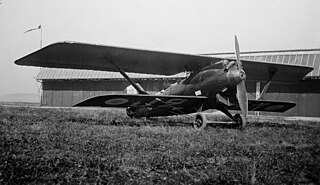
WThe Breguet 19 was a light bomber and reconnaissance aircraft, also used for long-distance flights, designed by the French Breguet company and produced from 1924.
 W
WThe Dyle et Bacalan DB-10 was a heavy night bomber, designed in France and flown in 1926. It was a twin engine, high wing, metal frame monoplane, distinguished by a very thick centre section wing which formed the forward fuselage and housed the engines.
 W
WThe Farman BN.4, a.k.a. Super Goliath, was a very large 1920s French biplane designed by Farman as a long-range night bomber.
 W
WThe Farman F.140 Super Goliath was a very large, four engine biplane night bomber, designed in France in the mid-1920s. Nine flew with the French Air Force until concerns about structural weakness grounded them in 1930. The prototype set several world records for altitude reached with heavy useful loads.
 W
WThe Farman F.160 was a heavy bomber aircraft developed in France in the late 1920s. It was essentially an attempt by Farman Aviation Works to modernise its tremendously successful F.60 Goliath design of the immediately postwar years. The most noticeable external difference was the larger tailfin of the new aircraft. Like its predecessor, it was a large three-bay biplane of conventional configuration with unstaggered wings of equal span. Initially conceived as a heavy night bomber, most examples built were float-equipped torpedo bombers for the Aéronautique Maritime, which operated some 40 of the F.165 variant and 200 of the F.168. One of the original F.160 night bombers was exported to Italy, and one to Japan. Plans to develop airliner versions did not progress past the prototype stage.
 W
WThe FBA 19 was a flying boat bomber developed in France in 1924 by Franco-British Aviation.
 W
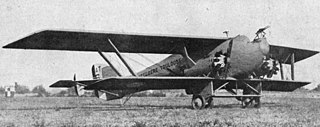
WThe Latécoère 6 was a French four-engined biplane bomber of the early 1920s. It was of advanced all-metal construction and probably the first aircraft to use geodetic construction. Only one was built.
 W
WThe Latham 43 was a flying boat bomber built in France in the 1920s for service with the French Navy. It was a conventional design for its day - a two-bay biplane with unstaggered wings, and engines mounted tractor-fashion on struts in the interplane gap. The pilot sat in an open cockpit, with a gunner in an open bow position, and another in an open position amidships.
 W
WThe Latham HB.5 was a French biplane flying boat with four engines in push-pull configuration pairs. Ten were used by the French Navy.
 W
WThe Levasseur PL.2 was a French biplane torpedo bomber designed by Pierre Levasseur for the French Navy.
 W
WThe Levasseur PL.7 was a torpedo bomber developed in France in the late 1920s. It was a development of Levasseur's PL.4 reconnaissance aircraft and intended to replace their PL.2 then in service with the Aéronavale. It was a single-bay biplane of largely conventional design, but incorporating safety features for naval operation, including jetissonable main undercarriage units, a watertight, boat-shaped fuselage, and small floats on the undersides of the lower wings.
 W
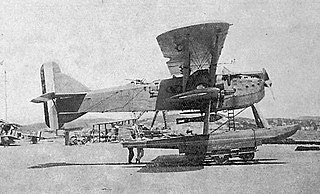
WThe Levasseur PL.14 was a torpedo bomber seaplane developed in France in the late 1920s. It was essentially similar to Levasseur's PL.7 carrier-based reconnaissance aircraft with the addition of pontoons. The design dispensed with the small underwing floats that formed part of the safety equipment of Levasseur's carrier-based aircraft of the period, but retained the boat-like fuselage. The wing was built to the 18.00-metre design originally developed for the PL.7 but ultimately rejected in favour of a shorter wing.
 W
WThe Lioré et Olivier LeO 12 was a night bomber built in France in 1924.
 W
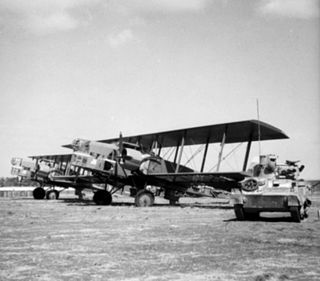
WThe Lioré et Olivier LeO 20 was a French night-bomber aircraft built by Lioré et Olivier.
 W
WThe Lioré et Olivier LeO 25 was a bomber aircraft produced in France in the late 1920s.
 W
WThe Lioré et Olivier LéO H-13 was a French biplane two-engine flying boat of the 1920s, built in passenger and military variants.
 W
WPotez 25 was a French twin-seat, single-engine biplane designed during the 1920s. A multi-purpose fighter-bomber, it was designed as a line aircraft and used in a variety of roles, including fighter and escort missions, tactical bombing and reconnaissance missions. In the late 1920s and early 1930s, Potez 25 was the standard multi-purpose aircraft of over 20 air forces, including French, Polish and American. It was also popular among private operators, notably mail transport companies.
 W
WThe Potez 35 was a twin engine bomber aircraft, designed and built in France in the late 1920s. Only one was completed.
 W
WThe Potez XIX was a prototype French night bomber built by Potez in the 1920s.
 W
WThe Schneider Henri-Paul was a French four-engined night bomber with an all-metal airframe. A single example was built and flown in 1922.
 W
WThe Schneider Sch.10M was an all-metal, twin-boom, twin-engine French aircraft from the mid-1920s, intended as a bomber and with strong defensive armament. Only one was built.
 W
WThe SPCA 10 or SPCA Paulhan-Pillard E.5 was a large, all-metal, French reconnaissance and bomber flying boat flown in 1928. Only one was built and this was lost in a fatal crash during development.
 W
WThe Wibault 2, Wib 2 or Wib 2 BN.2 was a single engine biplane aircraft designed and built in France in the early 1920s. It was intended as a heavy night bomber, though a thirteen-seat passenger version was proposed. Only one was built.