 W
WCarthage Jail is a historic building in Carthage, Illinois, listed on the National Register of Historic Places (NRHP). It was built in 1839 and is best known as the location of the 1844 killing of Prophet Joseph Smith, founder of the Latter Day Saint movement, and his brother Hyrum, by a mob of approximately 150 men. It was added to the NRHP in 1973 and is operated by The Church of Jesus Christ of Latter-day Saints as a historic site with an adjacent visitors' center.
 W
WThe Clay County Jail is a historic former jail located at 195 Main St. in Louisville, Illinois. Built in 1893, the jail was the third used by the county. The brick jail was designed in the Queen Anne style; its design features gabled dormers at the front of its hip roof and a spindlework front porch. The jail building also included the county sheriff's residence, a common arrangement which allowed the sheriff to oversee the prisoners at all times. The jail is now used as the Clay County Historical Society Museum.
 W
WThe Franklin County Jail, located at 209 W. Main St. in Benton, is the former county jail of Franklin County, Illinois. The jail was built in 1905–06 to replace the county's previous jail, which was built in the 1840s after the county seat moved to Benton. Architect Joseph W. Royer designed the jail; the brick building features limestone trim, a hip roof with gabled dormers, and a front porch which was rebuilt in 1997. The building also included the county sheriff's residence, an arrangement which allowed for the sheriff to continuously watch the prisoners. The jail housed prisoners until 1990, when a new jail was constructed after the State of Illinois condemned the old building. The Franklin County Historic Preservation Society has since converted the old jail to a historic museum.
 W
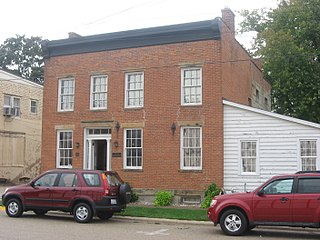
WThe Knox County Jail, located on the public square in Knoxville, is a former county jail used by Knox County, Illinois. Built in 1845, the jail was the second used in the county; it replaced a log jail which was thought to be insufficiently secure. Contractor Alvah Wheeler built the two-story brick building for $7,724. The county's only official hanging was conducted at the jail in 1873, when John M. Osborne was executed for the murder of Adelia Matthews; several hundred people came to watch his execution. Later in the same year, the county seat and the jail were both moved to Galesburg; the Knoxville jail is now part of the Knox County Museum.
 W
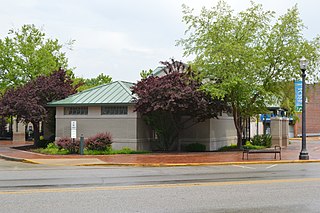
WThe Madison County Sheriff's House and Jail was a historic house and jail building located at 210 N. Main St. in Edwardsville, Illinois. Built in 1869 and opened in 1871, the building was the oldest Madison County government building in Edwardsville, the county seat. The building consisted of a three-story sheriff's house and an adjacent cell block; the cell block was expanded in 1904 to provide space for female prisoners. The sheriff's house was designed in the Second Empire style; it was one of two examples of the style in Edwardsville and the only one which had maintained its historical appearance. The building's design featured a mansard roof, two dormers on both the front and rear sides, and a bracketed wooden cornice.
 W
WThe Mercer County Jail is a historic county jail building located at 309 South College Avenue in Aledo, Mercer County, Illinois. Completed in 1909, the building was the county's third jail and its second in Aledo. Architect Clair F. Drury of Moline designed the Tudor Revival building. The two-story brick building features terra cotta ornamentation, including quoin-like window surrounds. The building's cross gabled roof has a large gable above the main entrance; both its gables and its dormers are parapeted. The jail served the county until a new jail was completed in 1989; it was later converted to a private business.
 W
WThe Perry County Jail, also known as the Perry County Jail Museum, is a history museum and historic jail in Pinckneyville, Illinois. Built in 1871, the jail was the second county jail used by Perry County. The county's first jail was built in 1833-34 and was demolished to make room for the new jail; it was a two-story brick building measuring 14 by 16 feet on the interior, and it cost $750 to build. The legislature passed two separate private laws to enable Perry County to obtain funds for the second jail's construction: one in 1865 to permit a tax levy, and the other in 1867 to permit the issuance of bonds. Although the county quickly solicited architects' plans upon being permitted to issue bonds, four years passed before they announced their choice of the design created by Cincinnati architect Samuel Hannaford. The contractor was chosen in May, a superintendent named in July, and the building deemed complete in December.
 W
WThe Williamson County Jail, located at 105 S. Van Buren St. in Marion, is the former county jail serving Williamson County, Illinois. The Prairie School building served as the county jail from 1913 to 1971. The jail housed prisoners involved with three violent conflicts in the 1920s: the Herrin massacre, the Klan War, and a gang rivalry between the Shelton Brothers Gang and Charles Birger's gang. The building is now a history museum and is listed on the National Register of Historic Places.