 W
WMary Cecil Allen was an Australian artist, writer and lecturer. She lived most of her adult life in America, where she was known as Cecil Allen. Allen initially painted landscapes and portraits in her early career, but changed to modernist styles including cubism from the 1930s. In 1927 Allen lectured at New York City venues including the Metropolitan Museum, Columbia University and other institutions. She was sponsored by the Carnegie Corporation. Allen wrote two books of art criticism, The Mirror of the Passing World (1928) and Painters of the Modern Mind (1929), based on her lectures.
 W
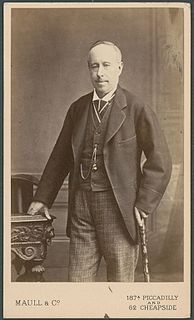
WGeorge French Angas, also known as G.F.A., was an English explorer, naturalist, painter and poet who emigrated to Australia. His paintings are held in a number of important Australian public art collections. He was the eldest son of George Fife Angas, who was prominent in the early days of the colonisation of South Australia.
 W
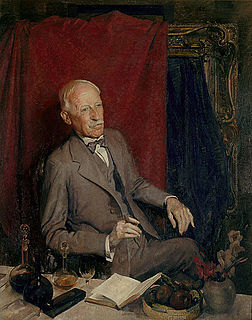
WJulian Rossi Ashton was an English-born Australian artist and teacher. He is best known for founding the Julian Ashton Art School in Sydney and encouraging Australian painters to capture local life and scenery en plein air, greatly influencing the impressionist Heidelberg School movement.
 W
WEdmund Henry "Harry" Baggs was a South Australian art teacher and painter, mostly of landscapes in oils, c. 1890–1920.
 W
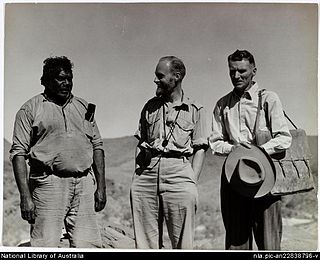
WReginald Ernest Battarbee was an Australian artist notable for painting landscapes of Central Australia, and for teaching Aboriginal artist Albert Namatjira to paint.
 W
WJane Ann Cooper Bennett is an Australian painter.
 W
WArthur Merric Bloomfield Boyd was a leading Australian painter of the middle to late 20th century. Boyd's work ranges from impressionist renderings of Australian landscape to starkly expressionist figuration, and many canvases feature both. Several famous works set Biblical stories against the Australian landscape, such as The Expulsion (1947–48), now at the Art Gallery of New South Wales. Having a strong social conscience, Boyd's work deals with humanitarian issues and universal themes of love, loss and shame.
 W
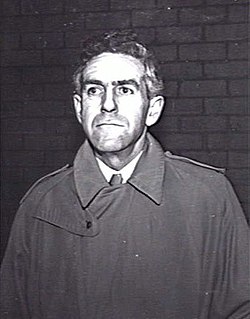
WErnest William Buckmaster (1897–1968) was an Australian artist born in Victoria. He won the Archibald Prize in 1932 with a portrait of Sir William Irvine. He also served as an Australian war artist during World War II.
 W
WLouis Buvelot, born Abram-Louis Buvelot, was a Swiss landscape painter who lived 17 years in Brazil and following 5 years back in Switzerland stayed 23 years in Australia, where he influenced the Heidelberg School of painters.
 W
WCharles Edward Conder was an English-born painter, lithographer and designer. He emigrated to Australia and was a key figure in the Heidelberg School, arguably the beginning of a distinctively Australian tradition in Western art.
 W
WAugustus Earle (1793–1838) is a British painter. Unlike earlier artists who worked outside Europe and were employed on voyages of exploration or worked abroad for wealthy, often aristocratic patrons, Earle was able to operate quite independently - able to combine his lust for travel with an ability to earn a living through art. The body of work he produced during his travels comprises a significant documentary record of the effects of European contact and colonisation during the early nineteenth century.
 W
WGeorge William Evans was a surveyor and early explorer in the Colony of New South Wales. Evans was born in Warwick, England, migrating to Australia in October 1802.
 W
WJohn Eyre, a pardoned convict, was an early Australian painter and engraver.
 W
WHaughton Forrest, sometimes incorrectly referred to as James Haughton Forrest, was an Australian artist who specialized in landscapes and maritime scenes.
 W
WAlbert Henry Fullwood was an Australian artist who made a significant contribution to art in Australia. He painted with Heidelberg School artists around Melbourne and moved with Tom Roberts and Arthur Streeton to live and paint at their camp in Sirius Cove, Sydney. Fullwood was the Australian official war artist to the 5th Division in the World War I.
 W
WFrederick Garling Jr. was a British-born Australian customs official and artist.
 W
WMary Harriet Gedye (1834–1876) was an Australian watercolourist.
 W
WSamuel Thomas Gill, also known by his signature S.T.G., was an English-born Australian artist.
 W
WRobert Hoddle was a surveyor and artist. He is best known as the surveyor general of the Port Phillip District from 1837-1853, especially for creation of what is now known as the Hoddle Grid, the area of the CBD of Melbourne. He was also an accomplished artist and depicted scenes of the Port Phillip region and New South Wales. Hoddle was one of the earliest-known European artists to depict Ginninderra, the area now occupied by Canberra, Australia's National Capital.
 W
WLeonard Hugh Long OAM was an Australian painter of the Australian School of landscape painters.
 W
WJoseph Lycett was a portrait and miniature painter, active in Australia. Lycett specialised in topographical views of the major towns of Australia, and some of its more dramatic landscapes.
 W
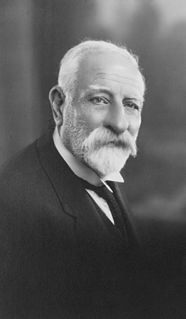
WConrad Martens was an English-born landscape painter active on HMS Beagle from 1833 to 1834. He arrived in Australia in 1835 and painted there until his death in 1878.
 W
WJohn Baxter Mather was a Scottish born journalist, newspaper proprietor, landscape painter and art critic in South Australia.
 W
WFrederick McCubbin was an Australian artist, art teacher and prominent member of the Heidelberg School art movement, also known as Australian impressionism.
 W
WBenjamin Edwin Minns was an Australian artist, recognised as one of Australia's foremost watercolourists.
 W
WAlbert Namatjira was an Aboriginal artist from the MacDonnell Ranges in Central Australia. As a pioneer of contemporary Indigenous Australian art, he was the most famous Indigenous Australian of his generation.
 W
WAdela Dora Ohlfsen-Bagge, known professionally as Dora Ohlfsen, was an Australian sculptor and art medallist. Working mostly in Italy, her first prominent work was a bronze medallion, The Awakening of Australian Art (1907), which won an award at the 1908 Franco-British Exhibition in London and was purchased for the Petit Palais in Paris. Other notable works include the Anzac Medal (1916), created to raise funds for Australians and New Zealanders who fought in the Gallipoli campaign, and Sacrifice (1926), the war memorial in Formia, Italy.
 W
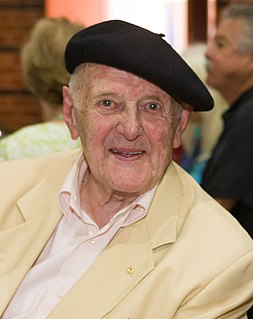
WJohn Henry Olsen, AO, OBE is an Australian artist and winner of the 2005 Archibald Prize. Olsen's primary subject of work is landscape.
 W
WJohn Ford Paterson was a Scottish-born Australian artist. He specialised in landscapes.
 W
WGeorge Edwards Peacock was an Australian Colonial artist. He was born in England and transported to Australia for forgery in 1837. While working as a meteorologist at South Head, Sydney, he started exhibiting paintings. The surviving landscape paintings are now considered as early documents of Colonial Sydney.
 W
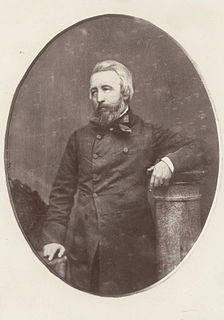
WJohn Skinner Prout (1805–1876) was a British painter, writer, lithographer and art teacher who worked in Australia in the 1840s.
 W
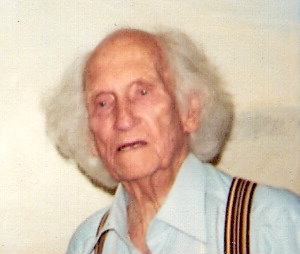
WLloyd Frederic Rees AC CMG was an Australian landscape painter who twice won the Wynne Prize for his landscape paintings.
 W
WThomas William "Tom" Roberts was an English-born Australian artist and a key member of the Heidelberg School art movement, also known as Australian impressionism.
 W
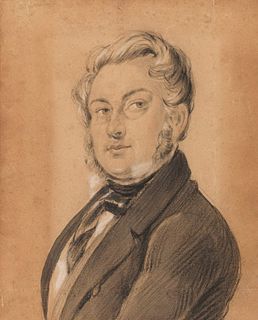
WCharles Rodius was a German-born artist, printmaker and architect. Trained in France before moving to England, he was transported as a convict to the Australian penal colony of New South Wales for theft in 1829.
 W
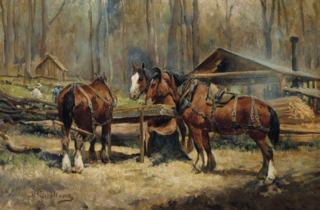
WJan Hendrik Scheltema, was a Dutch and later Australian painter who had a prolific, often strenuous, and arguably impressive career in Australia considering he was a non-British migrant artist without an international reputation on arrival in Australia. After working as a portrait painter in the Netherlands, he specialized in Australia as a livestock and landscape painter, making the livestock genre, particularly the foreground cattle genre, popular there. In Australia, he painted mainly in Victoria and was long living in Melbourne where he also practiced as a painting and drawing teacher.
 W
WAnthony Charles Smibert is an artist and aikido teacher. He has exhibited artworks and published research internationally, much of the latter on the methods of 19th century watercolourist J. M. W. Turner. He is the President of Aiki Kai Australia and a member of the Senior Council of the International Aikido Federation. In the Queen's Birthday Honours in June 2016, Smibert was appointed a Member of the Order of Australia (AM) "for significant service to aikido through a range of roles, and to the visual arts as a painter and water colourist". His home, studio and gallery are in Deloraine, Tasmania.
 W
WSophie (Sophia) Elizabeth Steffanoni (1873–1906) was an Australian born artist who produced works in the style of the Heidelberg School art movement, also known as Australian impressionism.
 W
WSir Arthur Ernest Streeton was an Australian landscape painter and leading member of the Heidelberg School, also known as Australian Impressionism.
 W
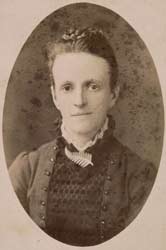
WJane Sutherland was an Australian landscape painter who was part of the pioneering plein-air movement in Australia, and a member of the Heidelberg School. Her advocacy to advance the professional standing of female artists during the late nineteenth century was also a notable achievement.
 W
WGeorge Grosvenor Thomas was an Australian-born Impressionist painter of Scottish ancestry; known primarily for landscapes and still-lifes.
 W
WThomas Watling, was an early Australian painter and illustrator, notable for his natural history drawings and landscapes.
 W
WWilliam Westall was an English landscape artist best known as one of the first artists to work in Australia.
 W
WWalter Herbert Withers was an English-born Australian landscape artist and a member of the Heidelberg School of Australian impressionists.