 W
WIvan Konstantinovich Aivazovsky was a Russian Romantic painter who is considered one of the greatest masters of marine art. Baptized as Hovhannes Aivazian, he was born into an Armenian family in the Black Sea port of Feodosia in Crimea and was mostly based there.
 W
WIvan Petrovich Argunov (1729–1802) was a Russian painter, one of the founders of the Russian school of portrait painting.
 W
WAbram Efimovich Arkhipov was a Russian realist artist, who was a member of the art collective The Wanderers as well as the Union of Russian Artists.
 W
WGevorg Bashinjaghian was an Armenian painter who had significant influence on Armenian landscape painting.
 W
WAlexandre Nikolayevich Benois was a Russian artist, art critic, historian, preservationist and founding member of Mir iskusstva, an art movement and magazine. As a designer for the Ballets Russes under Sergei Diaghilev, Benois exerted what is considered a seminal influence on the modern ballet and stage design.
 W
WNikolay Alexandrovich Bestuzhev (Russian: Николай Александрович Бестужев; was a Russian Navy officer, writer, inventor and portrait artist; associated with the Decembrist revolt.
 W
WIvan Gavrilovich Blinov was an outstanding Russian calligrapher and miniaturist, bookmaking master, who worked in the traditional manner.
 W
WGregor von Bochmann was a Baltic-German landscape and genre painter.
 W
WMykola Burachek was a Ukrainian Impressionist painter and pedagogue.
 W
WMarc Chagall was a Russian-French artist of Belarusian Jewish origin. An early modernist, he was associated with several major artistic styles and created works in a wide range of artistic formats, including painting, drawings, book illustrations, stained glass, stage sets, ceramics, tapestries and fine art prints.
 W
WMstislav Valerianovich Dobuzhinsky or Dobujinsky was a Lithuanian artist noted for his cityscapes conveying the explosive growth and decay of the early twentieth-century city.
 W
WGiorgi "Gigo" Ivanes dze Gabashvili was a Georgian painter and educator. One of the earliest Georgian representatives of the Realist School, his work is known for covering a wide range of subjects, landscapes and scenes of everyday life through orientalist lens. Although not widely known in the West, Gabashvili's paintings are highly valued - the artist's late 19th century painting The Bazaar in Samarkand, originally commissioned by Charles Richard Crane, sold for $1.36 million dollars at Christie's in 2006.
 W
WPrince Grigory Grigorievich Gagarin was a Russian painter, Major General and administrator.
 W
WCountess Ekaterina Fyodorovna Tolstaya, married name Junge was a Russian painter from the Tolstoy family.
 W
WIvan Semyonovich Kazakov (Russian: Иван Семёнович Казаков; was a Russian painter and graphic artist; residing in the Uzbek Soviet Socialist Republic.
 W
WAndré Lanskoy was a Russian painter and printmaker who worked in France. He is associated with the School of Paris and Tachisme, an abstract painting movement that began during the 1940s.
 W
WFelix Samoilovich Lembersky was a Russian/Soviet painter, artist, teacher, theater stage designer and an organizer of artistic groups. A refugee of World War I, he grew up in Berdyczów and studied art in Kiev and Leningrad—at the Jewish Arts and Trades School, known as Kultur-Lige (1928–29), the Kiev Art Institute (1933–34) and the Leningrad Academy of Art (1935–41). He graduated with high honors, completing his thesis during the Siege of Leningrad. He was wounded in the defense of Leningrad during World War II. His parents perished in Holocaust in Ukraine. After evacuation in 1942, Lembersky spent two years working in the Urals, recording industrial war effort. After the war, Lembersky joined the Leningrad Union of Artists. He exhibited widely in national and privately organized art shows in Russia and his work was acquired by museums and private collectors. While living in Leningrad, he also toured and worked in the Urals, Ladoga, Pskov and Baltic Republics. Much of his art is inspired by the Eastern Europe of his childhood—Ukraine and Ukraine. Among his most moving images are the portraits of his fellow citizens and the places where he lived and visited.
 W
WMikhail Yuryevich Lermontov was a Russian Romantic writer, poet and painter, sometimes called "the poet of the Caucasus", the most important Russian poet after Alexander Pushkin's death in 1837 and the greatest figure in Russian Romanticism. His influence on later Russian literature is still felt in modern times, not only through his poetry, but also through his prose, which founded the tradition of the Russian psychological novel.
 W
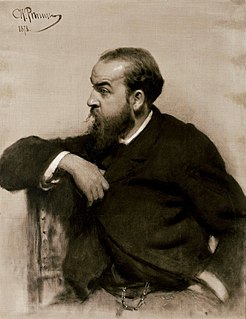
WRafail Sergeevich Levitsky was a Russian Empire and Soviet genre, romantic, and impressionist artist who was an active participant in the Peredvizhniki (Itinerant) Movement.
 W
WIvan Kuzmich Makarov was a Russian portrait painter.
 W
WKazimir Severinovich Malevich was a Russian avant-garde artist and art theorist, whose pioneering work and writing had a profound influence on the development of non-objective, or abstract art, in the 20th century. Born in Kyiv to an ethnic Polish family, his concept of Suprematism sought to develop a form of expression that moved as far as possible from the world of natural forms (objectivity) and subject matter in order to access "the supremacy of pure feeling" and spirituality. Malevich is considered to be part of the Ukrainian avant-garde that was shaped by Ukrainian-born artists who worked first in Ukraine and later over a geographical span between Europe and America.
 W
WMordechai Tzvi Maneh, also known by the pen name Ha-Metzayer, was a Russian Hebrew lyric poet, translator, and artist.
 W
WPyotr Alexandrovich Nilus was a Russian Imperial impressionist painter and writer of Swiss descent who emigrated to France as the Soviet Union was formed.
 W
WGrand Duchess Olga Alexandrovna of Russia was the youngest child of Tsar Alexander III of Russia and younger sister of Emperor Nicholas II.
 W
WAleksander Orłowski was a Polish painter and sketch artist, and a pioneer of lithography in the Russian Empire.
 W
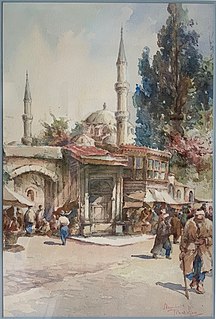
WJ. Pavlikevitch was a watercolor painter, putatively of Russian origin, who was active in Istanbul, Turkey, in the early decades of the 20th century.
 W
WNiko Pirosmani, simply referred to as Nikala (ნიკალა) (1862–1918), was a Georgian naïve painter who posthumously rose to prominence. Relatively poor for most of his life, he worked a variety of ordinary jobs. His rustic, everyday scenes are celebrated today for their depiction of the Georgia of Pirosmani's lifetime, and he has become one of the country's most beloved artistic figures.
 W
WMykola Kornylovych Pymonenko, also known as Nikolai Kornilovich Pimonenko ; 9 March 1862, Priorka, near Kiev, Russian Empire; [now Kyiv, Ukraine] — 26 March 1912, Kiev, Russian Empire) was a Ukrainian-born realist painter who lived and worked in the Russian Empire.
 W
WNikodim Yurevich Silivanovich, or Nikodemas Silvanavičius was a Russian Empire painter and mosaicist. Member of the Imperial Academy of Arts.
 W
WRufin Gavrilovich Sudkovsky was a Russian Imperial landscape painter who specialized in naval and maritime scenes. Rufin Sudkovsky was also well known as the first husband of the popular illustrator Elena Samokysh-Sudkovskaya.
 W
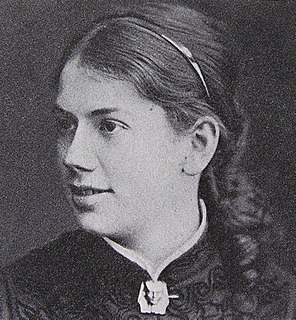
WCountess Tatiana Lvovna Sukhotina-Tolstaya, was a Russian painter and memoirist. She is the second child and oldest daughter of writer Leo Tolstoy.
 W
WMariya Ivanovna Vassiliéva, , better known as Marie Vassilieff, was a Russian-born painter active in Paris.
 W
WVasily Alekseyevich Volkov was a Russian-Ukrainian Academic painter; known primarily for portraits and historical scenes.
 W
WAlexei Yegorovich Yegorov was a Russian painter, draftsman and professor of history painting.