 W
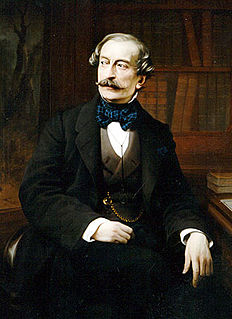
WVittorio Avondo was an Italian antiquarian and painter born in Turin, where he served as a member of the city council. In his painting, he depicted mainly landscapes from his native Piedmont. He is considered one of the painters of the School of Rivara, which included Carlo Pittara.
 W
WMassimo Taparelli, Marquess of Azeglio, commonly called Massimo d'Azeglio, was a Piedmontese-Italian statesman, novelist and painter. He was Prime Minister of Sardinia for almost three years, until his rival Camillo Benso, Count of Cavour succeeded him. D'Azeglio was a moderate liberal who hoped for a federal union between Italian states. As Prime Minister, he consolidated the parliamentary system, getting the young king to accept his constitutional status, and worked hard for a peace treaty with Austria. Although himself a Roman Catholic, he introduced freedom of worship, supported public education, and sought to reduce the power of the clergy in local political affairs. As senator, following the annexation of the United Provinces of Central Italy, Azeglio attempted to reconcile the Vatican with the new Italian Kingdom. His brother Luigi Taparelli d'Azeglio was a Jesuit priest.
 W
WGiovanni Battista Benaschi, or Beinaschi, (1636–1688) was an Italian painter and engraver active in the Mannerist and Baroque style.
 W
WErnesto Bertea (1836–1904) was an Italian painter, mainly of landscapes and genre paintings.
 W
WCarlo Felice Biscarra was an Italian painter and art critic.
 W
WFrancesco Cairo, also known as Francesco del Cairo, was an Italian Baroque painter active in Lombardy and Piedmont.
 W
WMarco Calderini was an Italian painter, mainly of land- and cityscapes (vedute) in a Romantic style.
 W
WGiuseppe Camino (1818-1890) was an Italian painter, mainly of landscapes and vedute.
 W
WFerdinando Cavalleri (1794–1867) was an Italian painter, specializing in history subjects and portrait, active in a Neoclassical-style.
 W
WVittorio Cavalleri or Cavalieri was an Italian painter. He mainly painted outdoor genre scenes.
 W
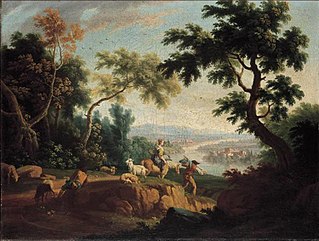
WVittorio Amedeo Cignaroli (1730–1800) was an Italian painter and architect. He was the grandson of Martino Cignaroli.
 W
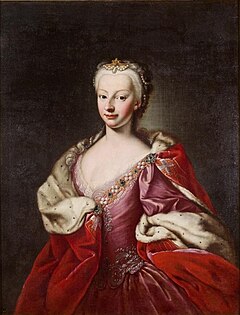
WMaria Giovanna Clementi (1692–1761), called la Clementina, was an Italian painter, specializing in portraits.
 W
WRaffaele Contigiani (1920–2008) was an Italian architect and painter. He qualified as an architect in 1947 and designed pavilions for the Italian Chamber of Commerce in the 1950s and 1960s. He was a consultant for the Italian television broadcaster RAI in the 1960s but is best known for his design for Hotel du Lac (1970–1973) in Tunis which he designed in the brutalist style.
 W
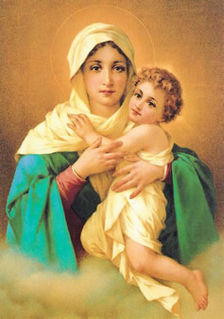
WLuigi Crosio (1835–1915) was an Italian painter who lived and worked in Turin, Italy. He died in Turin and is recorded as having been born in Alba, but the town of Acqui Terme, a few miles south of Alba, claims Crosio was born there.
 W
WCharles Claude Dauphin or Dofin, called in Italian Delfino, a French painter of historical subjects and portraits, was the son of Olivier Dauphin.
 W
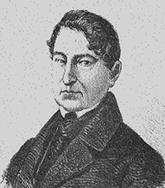
WMarquis Roberto d’Azeglio (1790–1862) was an Italian painter.
 W
WGiorgio Domenico Duprà (1689-1770) was an Italian rococo court painter born at Turin who was active in the 18th century.
 W
WGiuseppe Duprà (1703–1784) was an Italian painter born at Turin who was active in the eighteenth century.
 W
WLeonardo Fea was an Italian explorer, zoologist, painter, and naturalist.
 W
WEnrico Gamba was an Italian painter of genre scenes, period pieces and a few portraits.
 W
WFrancesco Gamba was an Italian painter, mainly of seascapes.
 W
WBartolomeo Giuliano was an Italian painter.
 W
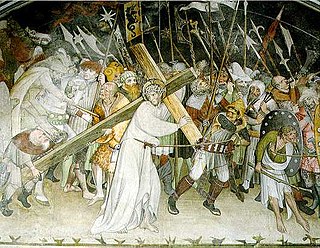
WGiacomo Jaquerio was an Italian medieval painter, one of the main exponents of Gothic painting in Piedmont. He was active in his native town Turin, Geneva and other localities of Savoy.
 W
WCarlo Levi was an Italian painter, writer, activist, anti-fascist, and doctor.
 W
WAlessandro Lupo was an Italian painter.
 W
WPaolo Emilio Morgari was an Italian painter, primarily of religious subjects.
 W
WBeatrice Morgari was an Italian painter, mainly of genre subjects, often depicting intimate family scenes.
 W
WLuigi Morgari was an Italian painter, primarily of frescoes on religious themes.
 W
WPietro Morgari was an Italian painter, primarily of portraits.
 W
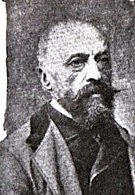
WCarlo Pittara was an Italian painter who specialized in animals, pastoral landscapes, rivers and peasants at work. He was also the leader of what came to be known as the Scuola di Rivara.
 W
WGiovanni Battista Quadrone was an Italian painter, mainly of genre scenes.
 W
WGiovanni Rava was an Italian painter, active mainly in Turin.
 W
WGiuseppe Troni was an Italian court painter. He was initially a pupil of his father, Alessandro Trono, but completed his studies in Rome. He was portrait painter to the court of Naples, and later to the court in Turin.
 W
WLuigi Vacca (1778–1854) was an Italian painter and scenic designer, active in the Piedmont.