 W
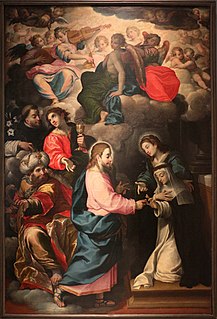
WCristoforo Agosta or Agosti or Augusta was an Italian painter of the Mannerist style.
 W
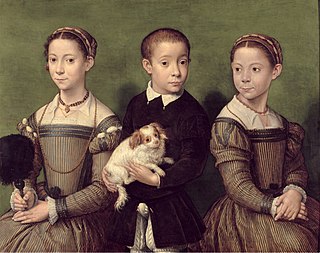
WAnna Maria Anguissola was a 16th-century Italian painter born in Cremona, Italy.
 W
WLucia Anguissola was an Italian Mannerist painter of the late Renaissance. She was born in Cremona, Italy. She was the third daughter of seven children born to Amilcare Anguissola and Bianca Ponzoni. Her father was a member of the Genoese minor nobility and encouraged his five daughters to develop artistic skills alongside their humanist education. Lucia most likely trained with her renowned eldest sister Sofonisba Anguissola. Her art, mainly portraits, are similar in style and technique with her sister. Her skill was seen by contemporary critics as exemplar. According to seventeenth-century biographer Filippo Baldinucci, Lucia had the potential to "become a better artist than even Sofonisba" had she not died so young.
 W
WBonifacio Bembo, also called Bonfazio Bembo, or simply just Bembo, was a north Italian Renaissance artist born in Brescia in 1420. He was the son of Giovanni Bembo, an active painter during his time. As a painter, Bonifacio mainly worked in Cremona. He was patronized by the Sforza family and was commissioned to paint portraits of Francesco Sforza and his wife Bianca Maria Visconti. He is also attributed with producing a tarot card deck for the Visconti-Sforza families. In the past century, art historians have begun to question the authenticity of his works, believing his only two secure works to be the portraits of Francesco and Bianca Maria Sforza. He is believed to have died sometime before 1482.
 W
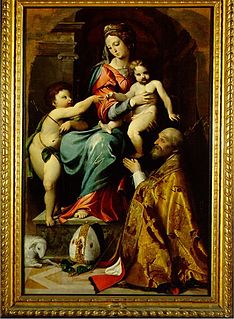
WGiovanni Francesco Bembo was an Italian Renaissance painter from Cremona, mainly active from 1515 to 1543. He apprenticed with Boccaccio Boccaccino. In 1515, he painted two frescoes: Presentation in the Temple and an Adoration of the Magi for the Duomo of Cremona. He painted an altarpiece for San Pietro depicting a Madonna with three saints and a donor in 1524. In 1530, he painted a Madonna with Saint Stephen and in 1540, a Madonna with St. John the Baptist and a Bishop now in the Museo Civico.
 W
WMario Biazzi was an Italian painter.
 W
WBoccaccio Boccaccino was a painter of the early Italian Renaissance, belonging to the Emilian school. He is profiled in Vasari's Le Vite delle più eccellenti pittori, scultori, ed architettori.
 W
WCamillo Boccaccino was an Italian painter of the Renaissance period, active mainly in Cremona and regions of Lombardy.
 W
WAgostino Bonisoli (1633–1700) was an Italian painter of the Baroque period, who was born and worked mainly in Cremona. He was the pupil of the slightly older painter Giovanni Battista Tortiroli, and afterward studied under a relation named Luigi Miradoro Agostino Bonisoli. He was more indebted to his own natural abilities and his studies of the works of Paolo Veronese than either his instructors. He was chiefly employed in easel pictures of portraits, and of religious and historical subjects. His largest work was painted in the Church of San Francesco, Cremona, depicting a dispute between St Anthony and the tyrant Ezzelino
 W
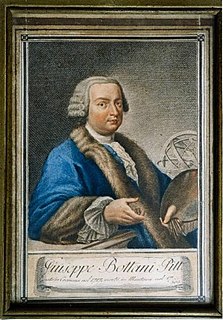
WGiuseppe Bottani was an Italian painter active in the Baroque period.
 W
WGaleazzo Campi was an Italian painter of the Renaissance from Cremona in Lombardy. He was a pupil of Boccaccio Boccaccini. His representation was rather rigid, but careful. His landscapes show influences of Perugino and Giovanni Bellini.
 W
WAntonio Campi was an Italian painter of the Renaissance.
 W
WBernadino Campi (1522–1591) was a Renaissance painter from Cremona, who worked in Reggio Emilia. He is known as one of the teachers of Sofonisba Anguissola and of Giovanni Battista Trotti. In Cremona, his extended family owned the main artistic studios. Giulio Campi and Antonio Campi, half-brothers, were distant relatives of Bernardino; the latter is generally considered the most talented of the family. All were active and prominent painters locally. Influences on Bernardino include local Cremonese such as Camillo Boccaccino and artists from neighboring regions such as Correggio, Parmigianino and Giulio Romano.
 W
WGiulio Campi was an Italian painter and architect. His brothers Vincenzo Campi and Antonio Campi were also renowned painters.
 W
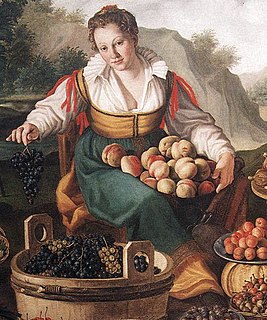
WVincenzo Campi was a 16th-century Italian painter working in Cremona during the Late Renaissance. Campi is best known as one of the first northern Italian artists to work in the Flemish style of realist genre painting.
 W
WAntonio Cicognara, was a 15th-century Italian painter.
 W
WLattanzio Gambara was an Italian painter, active in a Renaissance and Mannerist styles. It is likely that Gambara is the same 16th century painter referred to as Lattanzio Cremonese or Lattanzio da Cremona
 W
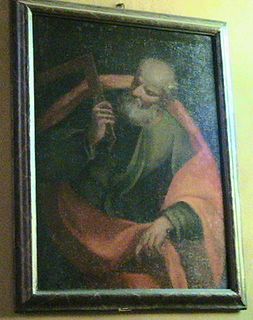
WBernardino Gatti was an Italian painter of the Renaissance, active mainly in Parma and Cremona. He is also commonly called il Sojaro.
 W
WMarco Antonio Ghislina (1676–1756) was an Italian painter, active mainly in Casalmaggiore and Cremona, painting sacred subjects in a Baroque-style.
 W
WStefano Lambri was an Italian painter of histories and portraits. He trained with the painter Giovanni Battista Trotti. He painted in 1628, for the Dominican Church of Cremona, a picture representing St. William and St. Louis Bertrand.
 W
WAndrea Mainardi, also known as il Chiaveghino, was an Italian painter of the late-Renaissance period, active in Cremona.
WAndrea Mainardi, also known as il Chiaveghino, was an Italian painter of the late-Renaissance period, active in Cremona.
 W
WPietro Malombra (1556–1618) was an Italian painter of the late-Renaissance, active in his adoptive city of Venice. He was an educated man who became chancellor of the republic. H
 W
WAngelo Massarotti (1653–1723) was an Italian painter of the Baroque period, active in his native Cremona.
 W
WAltobello Melone was an Italian painter of the Renaissance.
 W
WLuigi Miradori was an Italian painter of the Baroque period, active mainly in Cremona.
 W
WGiovanni Battista Trotti was an Italian painter of the late-Renaissance period, active mainly in Piacenza, Parma, and his native city of Cremona.
 W
WCarlo Urbino (1525/30–1585) was an Italian painter of the Renaissance.
 W
WAntonio Maria Viani was an Italian painter and carver of the Renaissance period. He was born in Cremona. He was a pupil of the Campi. He was court painter to Duke Vincenzo I Gonzaga, and adorned the large gallery of the Ducal Palace at Mantua with groups of children. He worked also at Capua. He died at Mantua at a very advanced age.